


Ministry seeks measures to improve access and affordability as government works with Human Resources Ministry and TalentCorp to prepare workers for technology-driven changes
By TENGKU NOOR SHAMSIAH TENGKU ABDULLAH
PETALING JAYA, Sept 28 – The Digital Ministry has submitted proposals to the Ministry of Finance for Budget 2027 as it seeks to accelerate artificial intelligence adoption and make emerging technologies more accessible to Malaysian businesses, particularly SMEs and MSMEs.
Digital Minister Gobind Singh Deo said the government was looking at how it could assist businesses in overcoming practical barriers to adopting AI, including access and affordability.
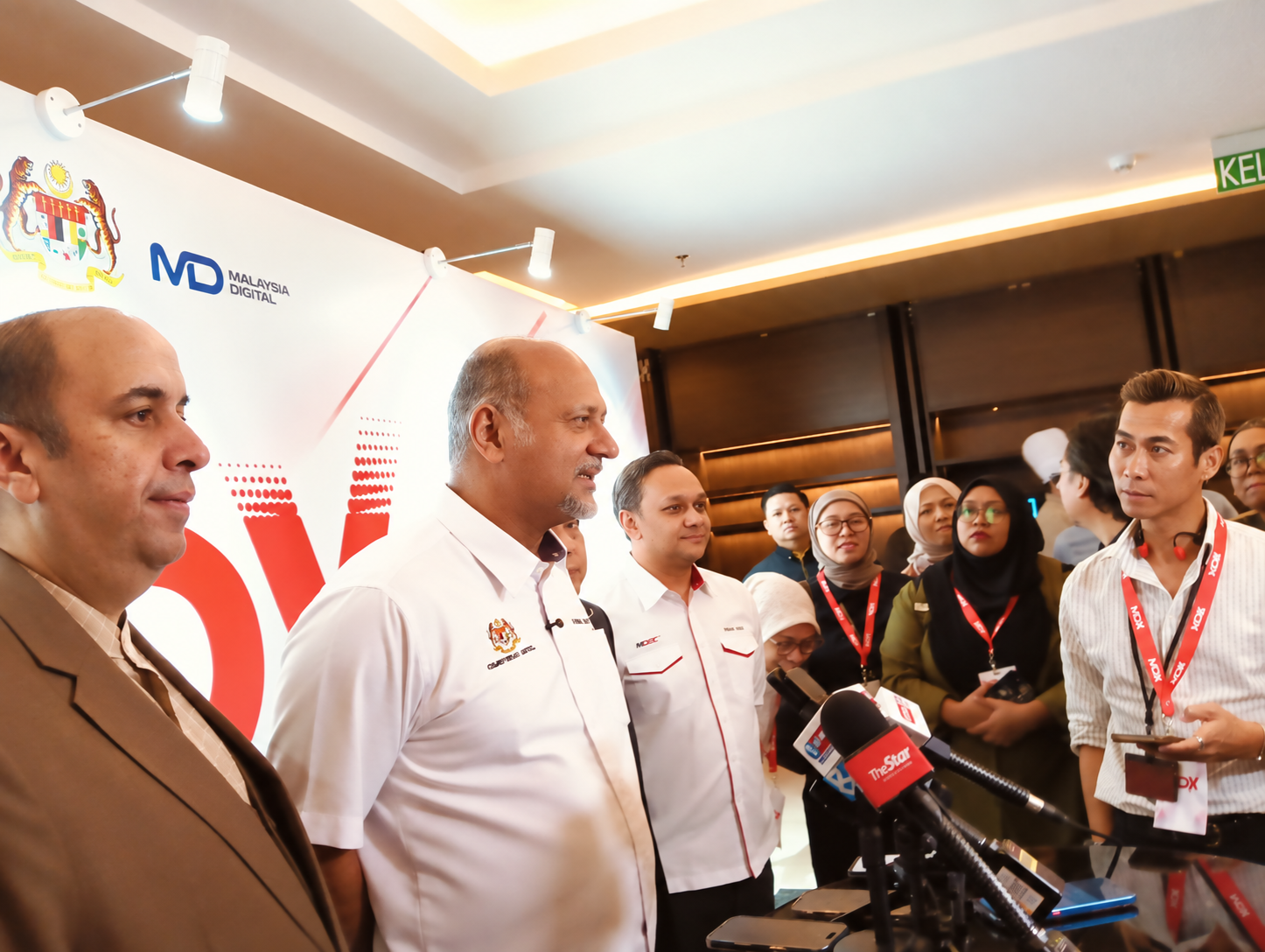
Speaking to reporters after launching the MDX Forum 2026 here today, Gobind said having advanced technology available was only part of the equation.
What mattered was whether businesses had sufficient confidence and ability to adopt it.
“What is important for us is to understand what technology exists, then what other critical parts are access and adoption,” he said.
Gobind said the government needed to ensure businesses could adopt new technologies and that affordability was addressed as part of that process.
“So the question here is how the government assists this process. We put in some suggestions, and I think that is something we are looking at,” he said.
Asked what the Digital Ministry hoped to see in the upcoming federal budget, Gobind confirmed that proposals had already been submitted to the Finance Ministry but stopped short of disclosing details.
“I don’t want to say too much, but we have already put in our request to the Ministry of Finance,” he said.
The comments expand on Gobind’s prepared remarks at MDX Forum, where he said he was looking forward to Budget 2027 and hoped the government would continue building on Malaysia’s digital and AI transformation momentum.
SMEs At Centre Of AI Adoption
Gobind said another priority was ensuring that SMEs and MSMEs could use AI and other technologies to strengthen and transform their businesses.
The challenge is not simply encouraging businesses to use AI, but creating conditions that make adoption commercially practical.
In his MDX address earlier, Gobind said digitalisation and AI needed to become more accessible, practical and commercially relevant for MSMEs.
For Malaysia Digital companies, the objective is to create stronger pathways towards commercialisation, investment and international markets.
The Malaysia Digital Acceleration Grant for Artificial Intelligence (MDAG-AI) is among the programmes intended to support Malaysia Digital companies in developing and commercialising AI solutions.
The issue takes on added significance as Malaysia’s digital ecosystem expands.
As of the second quarter of 2026, more than 7,000 companies had been awarded Malaysia Digital Status, of which more than 4,400 were active.
Of the 119 companies approved during Q2, 44 were primarily involved in AI, while AI, data centre and cloud, and global business services accounted for nearly 70 per cent of new approvals.
Preparing Workers For AI-Driven Change
Gobind also acknowledged that the rapid adoption of AI and other technologies would affect existing jobs, making workforce transition another important part of Malaysia’s digital strategy.
“You will have an impact on current jobs, but that does not mean that we are not creating jobs,” he told reporters.
The government, he said, has a responsibility to anticipate where employment changes are likely to occur over the next three to four years as Malaysia moves towards 2030.
Gobind said the Digital Ministry was working with the Human Resources Ministry and agencies such as TalentCorp to examine jobs likely to be affected by technological change.
The approach involves identifying groups that could be affected and looking at how workers can be prepared for changes brought about by technology.
His comments highlight the two sides of Malaysia’s AI transition: while new technologies could disrupt some existing occupations, they are also expected to create new categories of employment.
In his earlier address, Gobind said Malaysia’s digital transformation required the government to develop the talent needed for an increasingly digitally driven economy.
He also contrasted the employment generated by infrastructure alone with the potential of higher-value digital activities.
“A fully operational data centre employs a few dozen people. But an AI services industry, a cloud operations hub, or a regional digital headquarters employs thousands,” he said.
From Infrastructure To Adoption
The emphasis on adoption reflects the next stage of Malaysia’s AI ambitions.
At MDX Forum, Gobind said Malaysia had already recorded more than RM144 billion in approved data-centre and cloud commitments.
But attracting infrastructure investment alone, he argued, would not determine Malaysia’s success.
The bigger challenge is ensuring that the infrastructure supports Malaysian businesses, workers and innovation while helping the country move from consuming technologies developed elsewhere towards creating and commercialising its own.
For SMEs in particular, the next test will be whether Malaysia’s expanding AI infrastructure translates into technology that businesses can afford, access and use productively.
With Budget 2027 approaching, the Digital Ministry’s proposals to the Finance Ministry could provide an early indication of how the government intends to close that gap.
- TNS News