


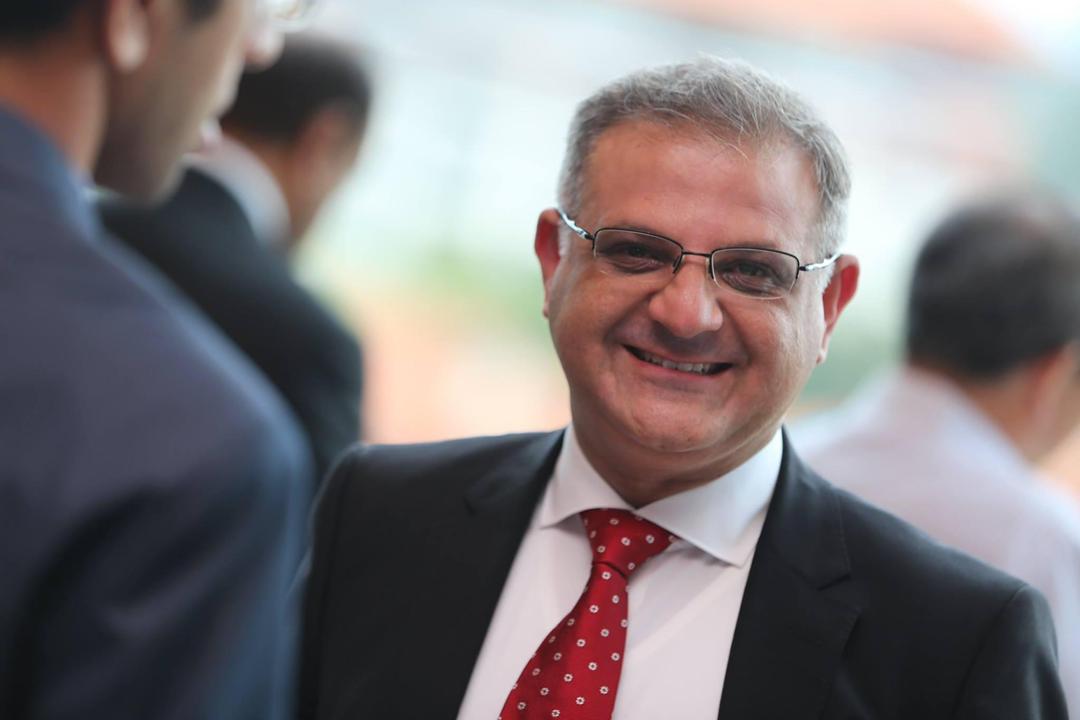

Shan Saeed, Global Chief Economist, Juwai IQI: ‘In every crisis lies an opportunity — ASEAN must integrate deeper & innovate faster
By TENGKU NOOR SHAMSIAH TENGKU ABDULLAH
KUALA LUMPUR, Aug 25 – US President Donald Trump’s second wave of protectionist tariffs has jolted global trade, and Malaysia—together with the broader ASEAN bloc—finds itself at a critical inflection point. While the specter of tariff escalation looms large, the region is not without strategic recourse.
The Reciprocal Tariff Policy
The tariffs are part of Trump’s “reciprocal tariff” doctrine, revived in his second presidential term. Under this policy, the U.S. imposes duties on foreign imports equivalent to what American exporters face abroad. Trump argues it restores “fairness” to global trade, but critics warn it fuels a new protectionist era that undermines decades of multilateral liberalization.

As of August 1, 2025, a standardized 19% tariff was applied across Southeast Asia, covering key sectors from electronics to machinery. While less severe than earlier threats of 40–50% levies, the move nonetheless reshapes trade flows, particularly for export-driven economies like Malaysia.
Malaysia’s Exposure
Malaysia’s export profile is highly entwined with the United States, particularly in semiconductors and high-tech electronics. Roughly 13% of total exports are destined for the U.S., with Penang—its semiconductor nerve center—especially vulnerable to reciprocal tariffs.
“Malaysia and ASEAN cannot afford to be complacent,” cautioned Shan Saeed, Global Chief Economist at Juwai IQI, in an interview with TNS News. “Trump’s tariffs are not a passing storm—they are structural. But they can serve as a wake-up call for the region to strengthen economic resilience, diversify markets, and leverage ASEAN’s collective bargaining power.”
ASEAN’s Strategic Response
Unlike China’s more confrontational trade posture, ASEAN has opted for pragmatism over retaliation. Member states, spearheaded by Malaysia, have called for enhanced regional integration and collective diplomacy, leveraging frameworks such as the ASEAN Free Trade Area (AFTA) and the Regional Comprehensive Economic Partnership (RCEP). These mechanisms provide ballast against external turbulence, deepening intra-Asian supply chains and diluting reliance on U.S. demand.

Foreign Minister Datuk Seri Mohamad Hasan: ASEAN must stay united, integrate deeper & diversify markets to withstand U.S. tariffs.
At the diplomatic level, “ASEAN foreign ministers, led by Malaysia, have requested a special summit with Washington to negotiate as a bloc—preserving regional leverage in the face of U.S. tariffs. Meanwhile, Foreign Minister Datuk Seri Mohamad Hasan emphasized the importance of market diversification and economic resilience, including deeper intra-ASEAN integration and expanding strategic ties with regions such as the GCC, BRICS, and China.
“ASEAN must think beyond the U.S.-China trade war narrative,” Shan remarked. “This is the time to position ASEAN as a hub for supply chain realignment, where companies relocating from China find Malaysia, Vietnam, and Thailand attractive destinations. That’s where the real opportunity lies.”
Risks and Silver Linings
The tariffs undeniably strain supply chains, particularly in Penang’s high-tech cluster, yet they have also accelerated trade diversion. Multinational firms relocating production from China have injected fresh investment into Malaysia, Vietnam, and Thailand, strengthening the region’s long-term industrial capacity.
Still, lurking challenges remain formidable:
- Non-tariff barriers and intensified rules-of-origin enforcement threaten to ensnare ASEAN exporters.
- Supply chain entanglement with China exposes the bloc to Washington’s scrutiny over trans-shipment.
- The U.S.’s tightening grip on strategic technologies (notably semiconductors and AI chips) adds another layer of geopolitical risk.
Shan underscored the delicate balancing act: “Malaysia must not only guard against external shocks but also upgrade its technological base. Competing in semiconductors, digital trade, and green technology will decide the country’s future relevance in the global supply chain.”
A Measured Optimism
Can Malaysia and ASEAN withstand this protectionist shock? The answer is cautiously affirmative. The combination of regional solidarity, institutional trade frameworks, and adaptive diplomacy provides ASEAN with tools to navigate the turbulence. Yet survival is not synonymous with immunity—continued resilience will require strategic agility, technological upgrading, and relentless diversification.
“In every crisis lies an opportunity,” Shan concluded. “Trump’s tariffs may be disruptive, but for ASEAN, they can also be catalytic—forcing the region to integrate more deeply, invest in innovation, and establish itself as a credible third pole in global trade.”
About Shan Saeed and Juwai IQI
Shan Saeed is a globally recognized economist with over 25 years of experience in financial markets. As Global Chief Economist at Juwai IQI, he provides strategic insights on macroeconomic trends, financial markets, and real estate. He is a frequent commentator in international media, known for his sharp analysis of U.S.-China dynamics, ASEAN economic resilience, and global commodity shifts.
Juwai IQI is a leading global real estate technology group headquartered in Kuala Lumpur, with offices spanning Asia, the Middle East, Africa, and North America. The company serves property buyers and investors worldwide, combining advanced proptech solutions with deep market expertise. Through its strong ASEAN footprint, Juwai IQI has become a barometer for investment sentiment and economic outlook in the region.
The Bottom Line
Malaysia and ASEAN are unlikely to crumble under Trump’s tariffs, but their durability hinges on unity and adaptability—turning external shocks into catalysts for deeper regional integration and a more multipolar trade strategy. Malaysia is leading from the front, and under the right stewardship, ASEAN’s “protectionist test” could mark the beginning of a stronger, more self-reliant regional order. – TNS NEWS