


A ceasefire, a NATO reckoning and the race for artificial intelligence point to a deeper shift. One leading economist warns against mistaking the loudest story for the most important one.
BY TENGKU NOOR SHAMSIAH TENGKU ABDULLAH
June 19, 2026
In a single week, Washington signed a breakthrough agreement with Tehran, NATO confronted difficult questions about its future, and major economies pressed on with efforts to shield strategic industries from geopolitical risk.
At first glance these developments may appear unrelated. In reality they are part of the same story: a world entering what may be described as the Great Rebalancing, a period in which governments are reassessing priorities, reallocating resources and redefining the foundations of power.
The post-Cold War order rested on a few assumptions. That globalisation would keep expanding. That economic interdependence would lower the odds of major conflict. That the United States could underwrite security across several regions at once while anchoring the global economy. Those assumptions are now being tested.
But not every headline carries equal weight, and one of the week’s sharpest voices warns against reading too much into the most dramatic of them.
The US-Iran Agreement: Significant, But Not a Turning Point
The most-watched development was the interim agreement between the United States and Iran, known as the Islamabad Memorandum of Understanding. It follows nearly four months of conflict that began in late February and widened into a regional crisis, with attacks on military targets, disrupted maritime traffic and severe interference with shipping through the Strait of Hormuz.
The memorandum establishes a ceasefire framework and a 60-day window to negotiate a permanent settlement. Its provisions include reopening the Strait to commercial shipping, easing restrictions on Iranian ports, talks on sanctions relief and negotiations on Iran’s nuclear programme under international oversight. Pakistan served as principal mediator and witness.
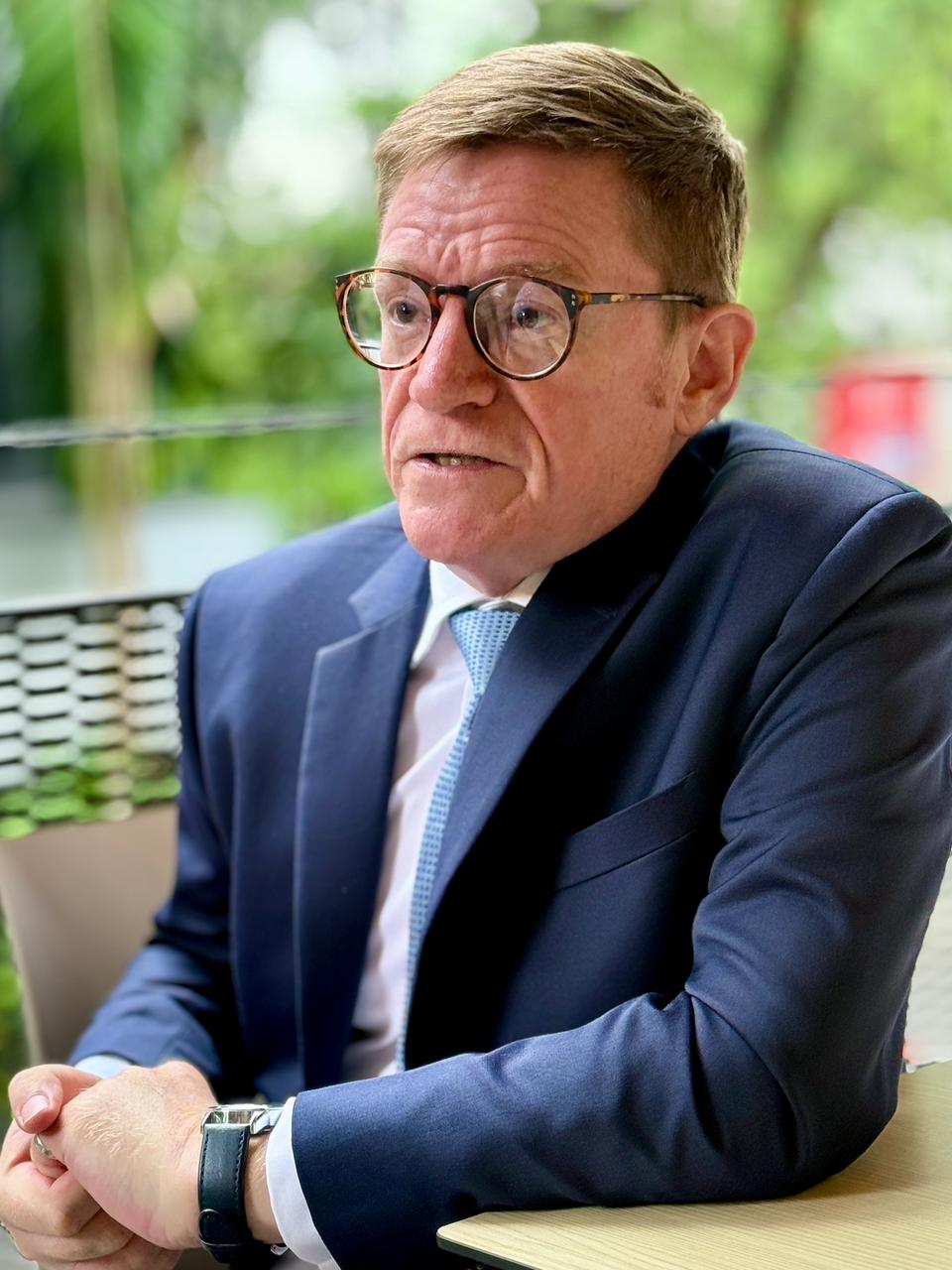
Professor Geoffrey Williams, Founder and Director of Williams Business Consultancy Sdn Bhd regards the deal as real progress. “The US-Iran peace agreement is significant,” he said, noting that while it follows a pattern of repeated ceasefires, “this time appears wider, including a ceasefire in Lebanon and an agreement to open the Strait of Hormuz. It already looks like both of those things are happening.”
The market reaction was immediate. “Oil prices have responded and are now around US$80 per barrel down one third from the peak at the end of April and only US$20 above the pre-conflict levels,” Williams told TNS NEWS. He expects that level to hold for some time. “We can expect oil prices to remain around US$80 until supplies normalise in 12-18 months. In the next 3-6 months the backlog in the Strait of Hormuz will ease.”
He is more cautious on inflation than the relief rally suggests. “Firms are likely to use high oil prices as an excuse to continue to raise prices and certainly prices will not fall,” he said. “So we may see some further inflation before inflation begins to fall.” His broader read, however, is constructive. “Overall the outlook is better for growth and inflation so interest rates should be maintained.”
“The whole thing is just 14 weeks long, this will not reshape the global balance of power.”
Here Williams parts company with the louder interpretations of the week. “I think speculation that this short-term dispute will significantly change the geopolitical balance of power is overstating what has happened,” he said, recalling that the military conflict was brief and that oil fell continuously once it was clear energy infrastructure was unharmed. Markets, in his view, simply wanted the Strait reopened, and it has reopened quickly.
That is a useful corrective. The rebalancing is underway, but its drivers are structural and slow, not a single ceasefire.
NATO and the Limits of American Power
The deeper shift is clearer within NATO. Days after the Iran agreement, US Defence Secretary Pete Hegseth announced a six-month review of American troop deployments in Europe and urged allies to take on more of their own defence. The message was unmistakable: burden-sharing is moving from talking point to policy.
For decades NATO’s strength rested on overwhelming American support. That support remains substantial, but the question has changed. It is no longer whether Europe should spend more, but whether Europe can build enough capability to reduce dependence on Washington without weakening the alliance.
Behind this lies a reality earlier generations largely avoided. Every commitment carries an opportunity cost. Resources fixed in Europe cannot also serve the Indo-Pacific. Forces tied to the Middle East cannot be used elsewhere. The rebalancing is therefore not only about allies paying more. It is about America redefining how and where it projects power.
Economic Security Becomes National Security
The same logic now governs economics. Supply chains once built purely for efficiency are being rebuilt around reliability and strategic necessity. Semiconductors, critical minerals, energy infrastructure, advanced manufacturing and digital networks are no longer treated as ordinary economic assets. They are strategic ones.
Hyper-globalisation is giving way to a more selective integration that balances openness with resilience. This is not the end of globalisation. It is its reordering, in which security weighs as heavily as efficiency.
The race for artificial intelligence is the clearest expression of this. The competition is usually framed as one of innovation, but it is really a contest for future influence. Just as oil shaped strategic competition in the twentieth century, data, computing power and AI may shape it in the twenty-first. The leaders will not necessarily be the largest economies, but those able to combine innovation, talent, infrastructure and governance into a coherent national strategy.
Why ASEAN and Malaysia Matter
For Southeast Asia, the rebalancing brings both exposure and opportunity. The region sits at the crossroads of trade, technology and strategic competition. Any disruption in the Gulf affects energy costs. Any deterioration across the Atlantic affects markets. Any escalation between major powers reaches supply chains.
Yet on the immediate crisis, Williams credits Malaysian policymakers with handling it well. “The recent oil price hikes emphasise that global trade is vulnerable to geopolitical shocks but actually policymakers in Malaysia have handled it well and learned lessons from previous shocks,” he said. “They have used stocks and reserves while actively seeking to diversify supplies and reduce reliance on narrow trade partnerships.”
The fiscal relief is direct. “For Malaysia the reopening of the Strait of Hormuz helps reduce oil prices which reduces the subsidy bill,” Williams said. “This was the main fiscal threat.” With the risk of physical supply restrictions easing, he expects no shortages, and sees policymakers in Malaysia and across ASEAN focused for now on normalising conditions rather than chasing larger ambitions.
The longer game is where the opportunity sits. As firms diversify and seek alternatives to geopolitical flashpoints, Southeast Asia continues to draw interest as a base for manufacturing, logistics and technology. For Malaysia, that is a strategic opening, but one that depends on strengthening innovation, developing talent and holding policy stable. In a world where resilience is becoming as valuable as efficiency, the ability to adapt may prove Malaysia’s greatest competitive advantage.
A World Between Eras
This week may be remembered less for resolving the world’s challenges than for revealing how governments are preparing for them. The Iran agreement, NATO’s burden-sharing debate, the turn toward economic security and the AI race point the same way.
Williams is right that a 14-week conflict will not, by itself, redraw the map. But the slower forces around it are doing exactly that. The era ahead will be defined less by convergence and more by competition, less by certainty and more by adaptability, less by assumption and more by hard choices.
The Great Rebalancing has begun. The nations that recognise it earliest, and position themselves accordingly, are likely to be best placed to prosper.
- TNS NEWS