



By TENGKU NOOR SHAMSIAH TENGKU ABDULLAH
PUTRAJAYA, 0CT 10 – The Forum Serantau YAPEIM 2024 (FSY2024), held on October 1 and 2, was hailed as a major success, drawing over 600 participants from various sectors across Malaysia, Indonesia, Singapore, Brunei, Thailand, Cambodia, and the United Kingdom.
The two-day event featured more than 60 distinguished panellists and moderators, coming together to discuss pivotal topics in the Islamic economy, finance, and the broader MADANI economic framework.
The forum, officially launched by Deputy Prime Minister Datuk Seri Fadillah Yusof, carried the theme “Empowering the MADANI Economy through Regional Synergy.” It provided a platform to address significant issues including Islamic finance, fintech, poverty alleviation, green economy, sustainability, and the digital economy. With the growing importance of entrepreneurship, youth employment, the halal industry, and Islamic tourism, discussions also focused on strategies to strengthen Islamic institutions and regional collaborations.
In his keynote address, Fadillah stressed the importance of regional cooperation to drive growth and tackle pressing challenges. “Through collective efforts, we can empower the MADANI economy and position the Nusantara region as a leader in sustainable Islamic finance,” he said.
The event also hosted four specialized masterclasses covering cultural nudges, social investment impact, collaboration opportunities with YAPEIM, and sustainable funding techniques for NGOs. These sessions were designed to deepen participants’ understanding and practical skills in these emerging areas.
Islamic Finance and Fintech: A Catalyst for Economic Growth
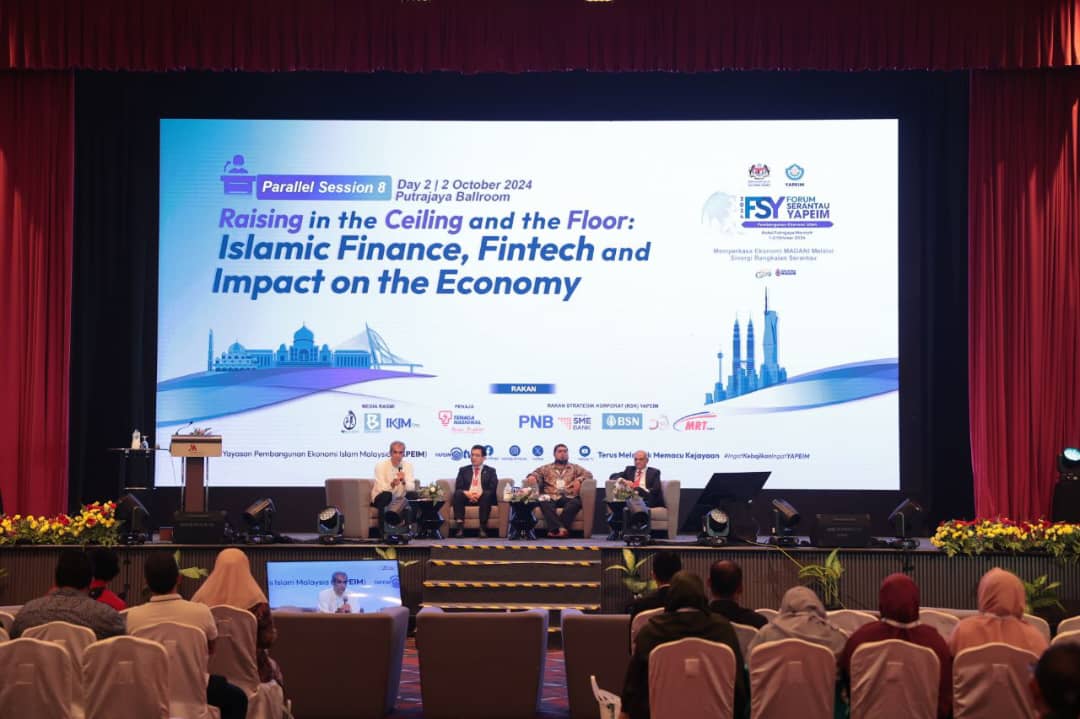
Among the highlights of the forum was the parallel session titled “Raising the Ceiling and the Floor: Islamic Finance, Fintech and Impact on the Economy,” led by Shan Saeed, Chief Economist at Juwai IQI. Shan’s macroeconomic analysis underscored Malaysia’s strategic position in the global financial market, emphasizing the need for foreign investments and fintech innovations to empower the MADANI economy.
“Malaysia has the potential to further strengthen its economic position by capitalizing on strategic partnerships and innovative fintech solutions. By 2025, we project the ringgit’s exchange rate to reach RM3.5 to the US dollar,” Shan predicted, advocating for a forward-looking approach to financial inclusion through regional synergy.
Eqhwan Mokhzanee, CEO of AmBank Islamic, highlighted Malaysia’s strides in enhancing financial access through the iTekad programme. “By providing micro-enterprises with tailored financial solutions, we not only support entrepreneurship but also drive economic resilience,” Eqhwan stated. He praised Bank Negara Malaysia’s financial inclusion roadmap as a key enabler in fostering an equitable economy.
Umar Munshi, Co-Founder and Group Managing Director of Ethis Group, echoed these sentiments, calling for greater collaboration between financial institutions and fintech players to build an inclusive financial ecosystem. “True progress in financial inclusion cannot be achieved in isolation. By working together, we can create comprehensive solutions that address specific community needs,” he said. Umar emphasized that partnership-driven innovations would serve not only underserved populations but the broader economy, fostering mutual growth.

Risk Mitigation and Financial Literacy: Keys to Empowerment
The discussion also delved into the critical roles of risk mitigation and financial literacy in empowering communities. Umar noted that enhancing financial literacy is fundamental to enabling informed decision-making. “When individuals understand financial products, they can better navigate uncertainties and make choices that positively impact their lives and businesses,” he explained. Umar called for increased investments in educational resources to build a more resilient and financially savvy population.
Moderated by Dr. Mohamed Ashraf bin Mohamed Iqbal, Chairman of Waafi Bank and Founder of MindSpring, the session concluded with optimism for Malaysia’s future. Panellists unanimously agreed that Islamic finance and fintech are poised to be powerful drivers of sustainable growth, elevating Malaysia’s global standing. “With Malaysia’s commitment to inclusivity, we can harness innovative financial solutions to empower underserved communities,” Dr. Ashraf noted.
Fostering Collaboration for a Sustainable Future
The forum also emphasized the importance of regional synergy, with participants discussing how to leverage each country’s strengths to address economic challenges, especially in the wake of global uncertainties. Through its diverse panels and masterclasses, FSY2024 served as a critical platform for stakeholders to collaborate on strategies for advancing Islamic finance, strengthening economic ties, and enhancing the well-being of the Muslim community in the region.
The consensus from the forum was clear: collaboration, innovation, and financial inclusion are key to unlocking the MADANI economy’s full potential, creating a more equitable and resilient future for the region.
In his speech at the opening of the forum, Datuk Mohd Radzif Mohd Yunus, Chairman of the Board of Trustees of YAPEIM, emphasized the significance of the event. “This forum marks a historic moment for YAPEIM as we celebrate our 40th anniversary. It is a testament to our commitment to fostering economic development and collaboration across the Nusantara region,” he stated.
He also highlighted the forum’s broader goals: “Our aim is to build a resilient Ummah through strategic partnerships and innovative solutions. By working together, we can address the economic challenges facing our communities and create a sustainable future for all.”
YAPEIM is an agency under the Prime Minister’s Department (Religious Affairs), established on October 13, 1976, and relaunched in 1984. The foundation plays a crucial role in enhancing community welfare through Islamic economic development, providing educational assistance to targeted groups, organizing community programs, and offering charitable donations. YAPEIM’s initiatives contribute significantly to Malaysia’s vision of an inclusive and sustainable economy.
- TNS News