


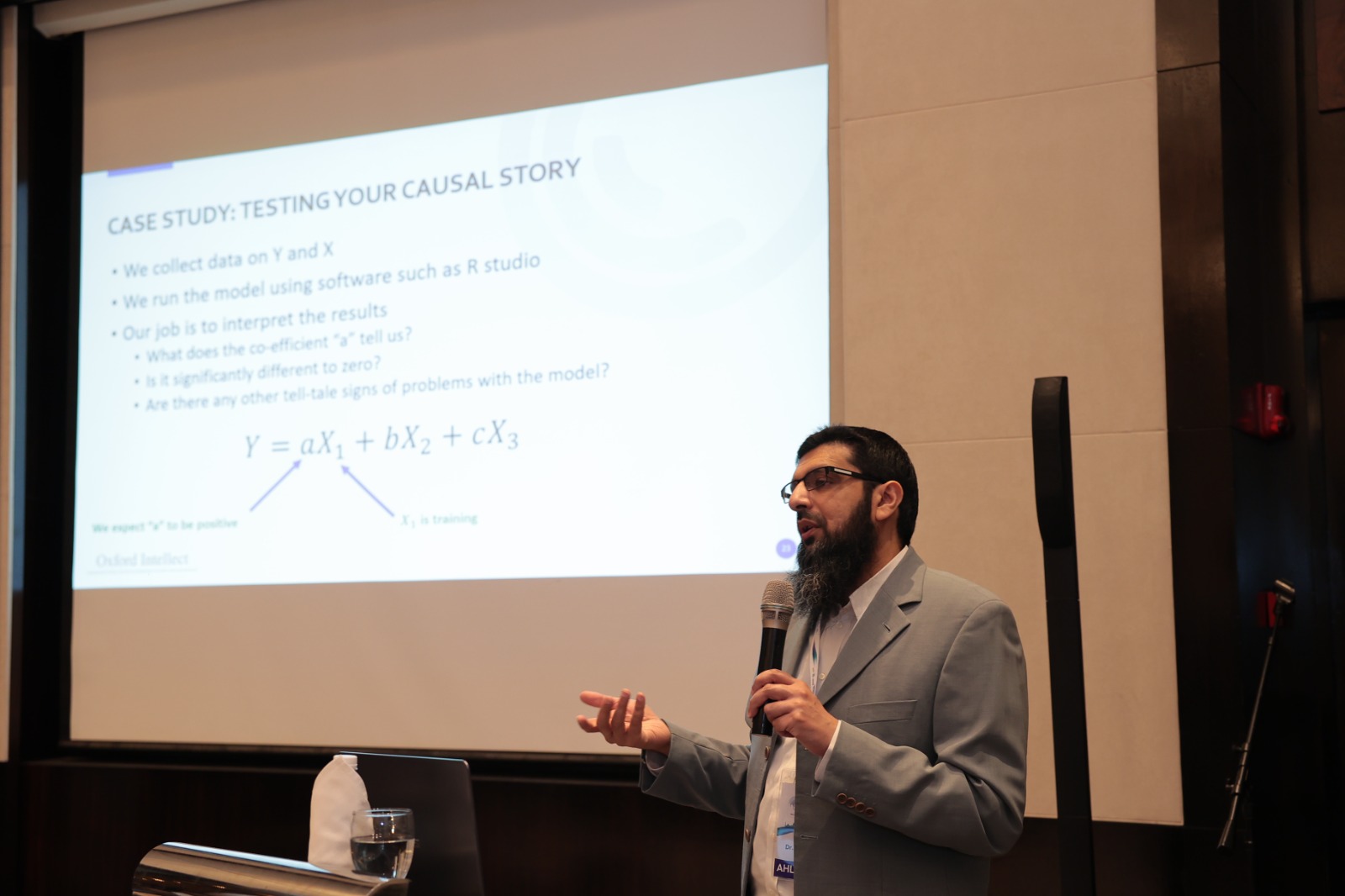

Oxford Intellect CEO Dr. Imran Alvi giving his presentation at FSY2024
BY TENGKU NOOR SHAMSIAH TENGKU ABDULLAH
PUTRAJAYA, Oct 24 – MALAYSIA can significantly benefit from the application of nudge theory to tackle pressing challenges such as financial literacy, education, and sustainable development. This was a key message from Dr. Imran Alvi, CEO of Oxford Intellect, during his presentation at the recent Forum Serantau YAPEIM 2024 (FSY2024).
Dr. Imran highlighted how this innovative approach can drive substantial improvements in public welfare, particularly in Malaysia and other developing nations.
His presentation, titled ‘Cultural Nudging for Policy Development and Fundraising: Techniques and Applications’, showcased the core principles of nudge theory—a concept popularized by Nobel laureate Richard Thaler.
He demonstrated its effectiveness in shaping public decision-making without infringing on individual freedom.
“The essence of nudging is to guide behaviour through subtle cues, preserving personal choice,” he explained. “This approach offers a unique opportunity to leverage cultural contexts to tackle pressing issues, from education to graduate employment, all at minimal cost.”
Throughout his talk, Dr. Imran provided compelling examples of successful nudging initiatives from around the globe. He highlighted how simple changes in messaging and environment can lead to significant improvements in areas such as health, environmental sustainability, and economic participation.
These real-world examples not only demonstrated the practical benefits of nudge theory but also sparked discussions about its potential for driving change in Malaysia.
By focusing on the behavioural insights that drive human decision-making, policymakers can create effective strategies that resonate with diverse communities.
In addition to showcasing practical applications, Dr. Imran emphasized the ethical dimensions of nudge theory, highlighting the critical role of transparency and respect for individual autonomy in crafting effective nudges.
“It’s essential that we design interventions that not only guide behaviour but also empower individuals to make informed choices,” he stated, underscoring the balance between influence and freedom.
His presentation resonated with attendees, fostering vibrant discussions on the ethical implications of nudging. Dr. Imran called for collaboration among policymakers, researchers, and community leaders, emphasizing that a multidisciplinary approach is crucial for addressing modern societal challenges.
By fostering open dialogue and collective action, Dr. Imran’s insights encouraged participants to explore how ethical nudging can drive meaningful change in their communities, reinforcing the alignment of behavioural interventions with public values.
He highlighted the significant advantages of nudge-based interventions, particularly their cost-effectiveness and ability to deliver substantial results with minimal investment.
“By employing nudges, governments can encourage positive behaviours without resorting to heavy-handed legislation,” he noted.
Dr. Imran emphasized the ethical balance that nudge theory introduces to modern policymaking, enhancing public trust while promoting individual autonomy.
“By subtly steering citizens towards better decisions, governments can achieve their policy goals without infringing on personal freedoms,” he explained.
This approach empowers individuals and cultivates a cooperative relationship between the public and policymakers.
Prioritizing transparency and ethical considerations, nudge theory emerges as a powerful tool for effective governance, helping societies navigate complex challenges while respecting citizens’ values and choices.
The Forum Serantau YAPEIM 2024 (FSY2024) marked a significant achievement, bringing together over 60 distinguished panellists and moderators from Malaysia, Indonesia, Cambodia, Singapore, Brunei, Thailand, and the UK for an engaging two-day event on October 1 and 2.

Audience members at Forum Serantau YAPEIM absorbing insights from Dr. Imran Alvi’s presentation on cultural nudging techniques for policy development and fundraising.
Officially launched by Deputy Prime Minister YAB Dauk Seri Fadillah Yusof, the forum attracted more than 600 participants from various sectors.
With the theme “Empowering the MADANI Economy through Regional Synergy,” the forum sparked insightful discussions on critical topics, including extreme poverty, economic disparities, Islamic finance, and the burgeoning digital economy.
Participants delved into sustainability, youth employment, the halal sector, and the strengthening of Islamic institutions.
Additionally, four masterclasses offered deeper insights into cultural nudges, social investment assessments, collaborative opportunities with YAPEIM, and innovative funding techniques for NGOs.

Participants at Forum Serantau YAPEIM attending Dr. Imran Alvi’s presentation on ‘Cultural Nudging for Policy Development and Fundraising
The goal of FSY2024 was to unite practitioners and visionaries in Islamic economic development, tackling current challenges, formulating strategies to enhance the Muslim economy, and bolstering economic ties among communities in the Nusantara region.
As governments, including Malaysia, seek innovative strategies to improve public welfare, nudge theory offers a pragmatic and scalable solution.
Dr. Imran concluded by underscoring the importance of evidence-based policy design and the role of behavioural insights in shaping the future of public governance.
Oxford Intellect, under the leadership of CEO Dr. Imran Alvi, is an education and training consultancy focused on knowledge transfer and innovative policy design. Leveraging expertise in behavioural economics, Oxford Intellect collaborates with global institutions to create evidence-based solutions for public policy challenges.
YAPEIM is an agency under the Prime Minister’s Department (Religious Affairs).
Established on October 13, 1976, and relaunched in 1984, YAPEIM plays a crucial role
in enhancing community welfare through Islamic economic development. The
agency provides educational assistance to targeted groups, offers community
programmes—both ongoing and one-off—and makes charitable donations to those in
need.
TNS News