


By TENGKU NOOR SHAMSIAH TENGKU ABDULLAH
KUALA LUMPUR, Oct 16 – Sixteen years after bilateral free trade negotiations were formally launched, Malaysia and the European Union are approaching a potentially decisive bargain. The remaining differences will test whether their ambitions for stronger economic ties can withstand the difficult compromises needed to achieve them.
Investment, Trade and Industry Minister Datuk Seri Johari Abdul Ghani’s assessment that negotiations are almost 80 per cent complete signals substantial progress. Yet outstanding matters, including palm oil and automotive trade, touch sensitive questions of market access, environmental regulation and domestic industrial development.
Malaysia is targeting an agreement by the end of June 2027. The challenge is to secure terms that businesses can use and that deliver benefits extending beyond higher trade volumes.
For Malaysia, the proposed Malaysia–EU Free Trade Agreement, or MEUFTA, should help attract technology, strengthen domestic suppliers and support better-paying jobs. For Europe, it offers an opportunity to deepen commercial ties with an established manufacturing economy and diversify important supply chains.
A Business Forum With Wider Stakes
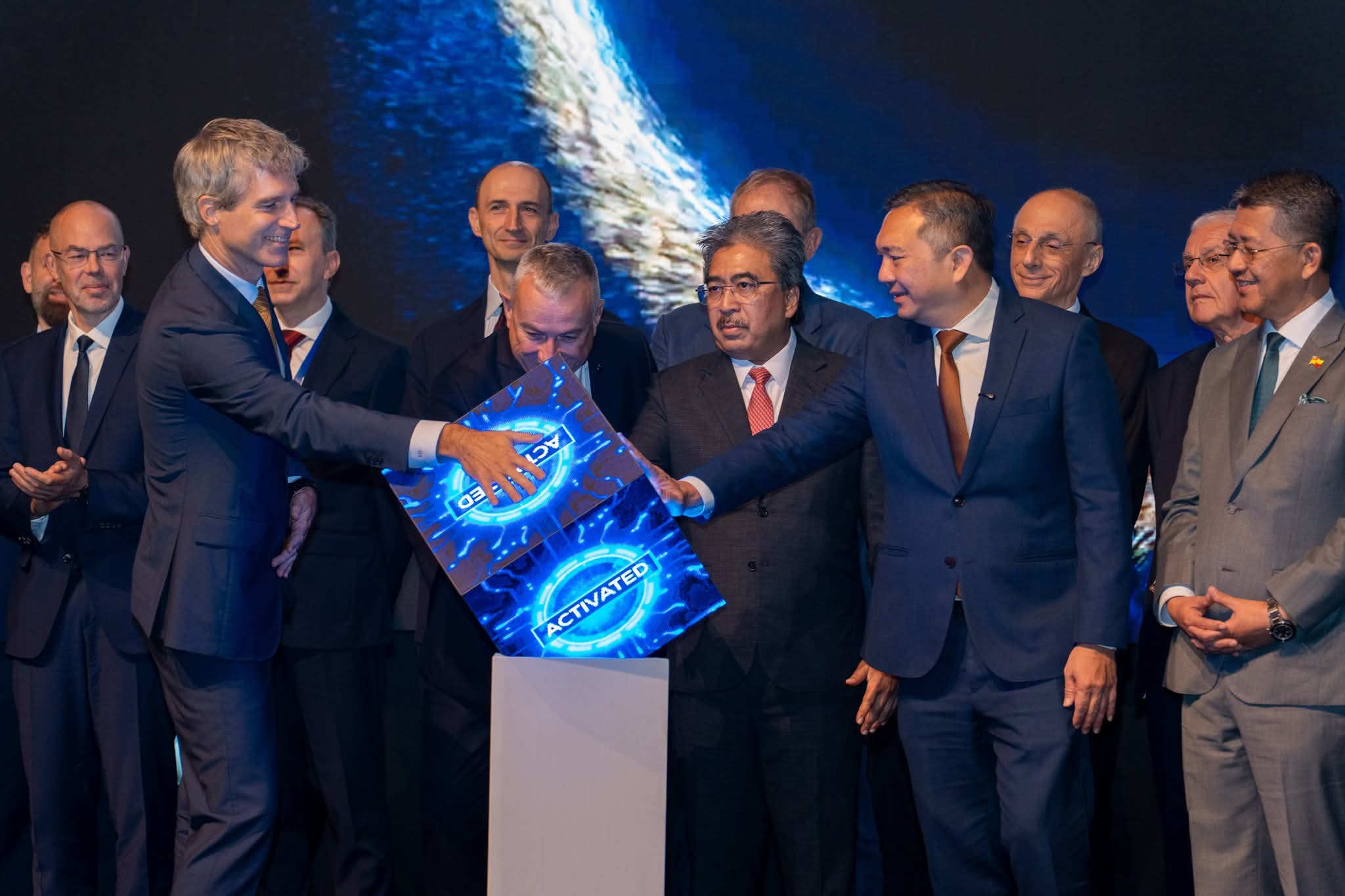
These expectations came into focus at EU–Malaysia Business Day 2026: Selangor in Focus, held at the Kuala Lumpur Convention Centre on October 13 under the theme “Bridging Innovation – Powering Progress”.
The third edition was hosted by the EU Delegation to Malaysia in collaboration with the Selangor government, Invest Selangor and EUROCHAM Malaysia, ahead of the Selangor International Business Summit.
Principal dignitaries included Johari; European Commissioner for International Partnerships Jozef Síkela; Selangor Menteri Besar Datuk Seri Amirudin Shari; EU Ambassador to Malaysia Rafael Daerr; and Selangor executive councillor for investment, trade and mobility Ng Sze Han.
Business leaders, policymakers, European chambers and EU member-state representatives gathered to discuss opportunities across manufacturing, digitalisation, energy, logistics and other sectors.
The forum provided a setting for both sides to articulate what a deeper partnership should achieve—and why an agreement must be commercially meaningful.
Síkela’s Benchmark: Both Sides Must Win
Síkela’s keynote offered a principle against which the eventual agreement should be assessed.
“If my career has taught me one thing, it is that a deal lasts only when both sides win,” he said in his prepared address.
He identified the ongoing FTA negotiations as an opportunity to unlock further trade, investment and growth, placing the relationship within a shared commitment to sustainable development, multilateralism and a rules-based international order.
His argument rested on complementary strengths: Malaysia’s talent, industrial capabilities and ambition, alongside Europe’s technology, investment and long-term partnerships.
He also emphasised the domestic benefits that investment should generate.
“We want investment to develop skills, create good jobs, strengthen local businesses and generate lasting value here in Malaysia,” he said.
That message aligns closely with Malaysia’s priorities. It also raises expectations about how the partnership will be implemented.
Greater investment can support industrial upgrading, but its wider benefits depend on the opportunities Malaysian workers and businesses gain to participate.
Johari’s Position: Wider Partnerships, Greater Domestic Value
Johari’s keynote set out Malaysia’s expectations for quality investments that facilitate technology transfer, develop local talent, create opportunities for Malaysian businesses and generate better-paying, highly skilled jobs.
He also stressed that Malaysia’s economic future should not be defined by a choice between East and West.
This gives MEUFTA a broader strategic purpose: strengthening Malaysia’s ability to work across major markets while securing greater domestic value from those relationships.
The convergence with Síkela’s position is encouraging. Both sides are presenting economic cooperation as a means of developing capabilities and delivering lasting benefits.
Turning that alignment into results requires more than treaty provisions. Supplier development, technical training and links between investors and domestic firms must accompany improved trading conditions.
A Long Interruption, A Changed Economic Landscape
The negotiating history explains both the impatience and the need for realism.
The bilateral process followed earlier EU–ASEAN region-to-region negotiations, launched in 2007 and paused in 2009.
Bilateral Malaysia–EU talks were formally launched on October 5, 2010, and were put on hold in 2012, after seven rounds, at Malaysia’s request. Following a stocktaking and scoping process, both sides announced their resumption on January 20, 2025. The first round of renewed negotiations took place in late June that year.
MEUFTA has therefore had a long gestation, rather than sixteen years of continuous bargaining.
The economic landscape has changed considerably during that interval.
Supply-chain resilience, digitalisation, clean energy and competition over strategic technologies now influence investment decisions. Environmental standards and traceability requirements increasingly shape market access alongside tariffs.
An agreement suited to this environment must make trading conditions more predictable. Businesses need to understand its requirements, establish eligibility for preferences and manage the associated costs.
Why The Remaining Gap Matters
At the joint press conference on the sidelines of the forum, Johari expressed confidence that outstanding differences could be resolved.
“I think these matters can be ironed out, but negotiations are still ongoing,” he said, according to the New Straits Times report reproduced by the Malaysian Palm Oil Board.
The June 2027 objective remains Malaysia’s target. Reporting from the event separately attributed to Síkela the hope that negotiations could conclude by the end of 2027 at the latest.
These statements indicate political ambition rather than a settled common deadline.
An estimate of 80 per cent completion also says little about the difficulty of the remaining decisions. Sensitive sectors can determine whether the entire package is acceptable.
Concluding negotiations, signing an agreement and bringing its provisions into operation are separate stages. Businesses will need clarity about each before planning around preferential access.
Palm Oil: Predictability Is Part Of Fair Treatment
Johari’s concerns about the EU Deforestation Regulation, or EUDR, expose an important dimension of the relationship.
He argued that repeated postponements create uncertainty and additional costs for businesses that have already invested in compliance. He also called for practical regulation that considers the circumstances of smallholders and smaller enterprises.
The issue deserves attention alongside the EU’s environmental objectives.
Additional preparation time can assist businesses struggling to comply. Changing implementation schedules can also complicate planning for companies that have committed resources.
For smaller producers, the challenge extends to providing the traceability information and supporting evidence buyers require. Without accessible systems and practical assistance, they risk losing opportunities to better-resourced suppliers.
MEUFTA could strengthen dialogue and cooperation on these difficulties. It should not be presented as automatically exempting Malaysian exports from EUDR.
Preferential trade access and compliance with applicable environmental legislation remain distinct matters.
The WTO Ruling Requires Precision
Malaysia’s 2024 WTO dispute is relevant to the wider debate over fair treatment, but it concerned EU renewable-energy measures affecting palm oil and palm oil-based biofuels, rather than EUDR.
The outcome was mixed. Malaysia succeeded on aspects of the challenged measures, while the ruling did not overturn the EU’s overall ability to pursue environmental and climate objectives through its renewable-energy framework.
It would therefore overstate the result to describe it as a blanket victory overturning European palm oil restrictions.
The lesson for MEUFTA is that environmental policy and fair trading conditions must be pursued together through transparent procedures, defensible evidence and consistent implementation.
Automotive Trade Requires A Workable Balance
Automotive matters present a different set of sensitivities. Reporting from the forum also identified steel among the outstanding issues.
The detailed negotiating offers have not been publicly disclosed sufficiently to establish the specific concessions under consideration.
The broader challenge is to balance improved market access with the adjustment needs of domestic manufacturers and suppliers.
Malaysia should seek opportunities for its industrial ecosystem to acquire capabilities and enter wider production networks. Clear transition arrangements, where negotiated, could give businesses a more predictable basis for investment and adaptation.
The Real Test Comes After The Negotiations
Síkela’s keynote identified wider opportunities involving semiconductors, the ASEAN Power Grid, maritime development, digital connectivity and renewable energy.
MEUFTA could strengthen the commercial framework around that cooperation. Investment and industrial upgrading would still require commitments beyond the agreement itself.
For exporters, success means usable preferences and predictable requirements. For smaller firms, it means understandable procedures and affordable compliance. For workers, it should support demand for more sophisticated skills and better employment opportunities.
Johari has set out Malaysia’s expectations for greater domestic value. Síkela has said a durable deal requires both sides to win.
Closing the final gap will require those ambitions to survive the hardest negotiations—and become commitments that work in practice.
- TNS NEWS