


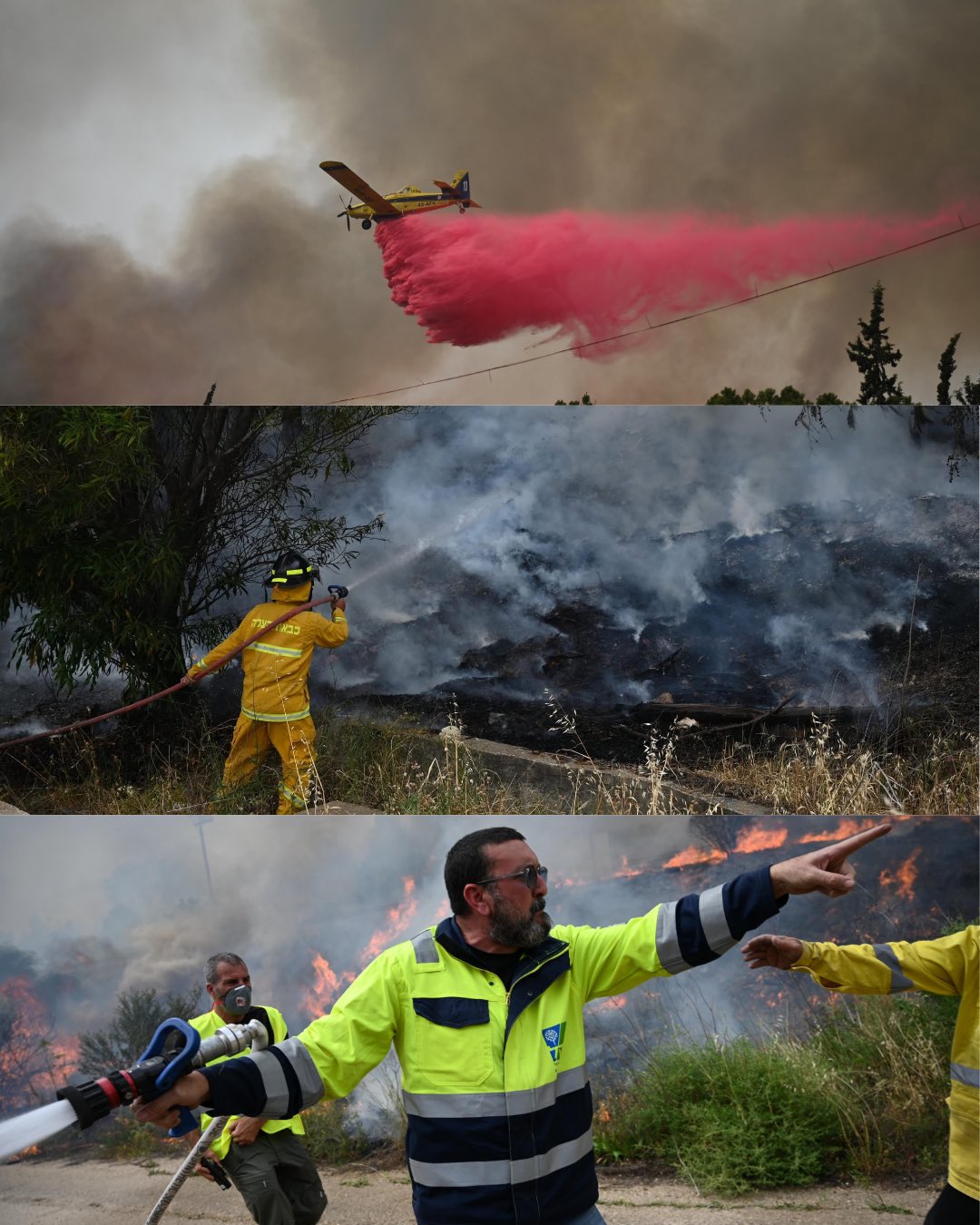

Wildfires rage near Jerusalem on the eve of Israel’s 77th Independence Day, forcing evacuations and highway closures.
Image sourced from the Israel Ministry of Foreign Affairs’ official Facebook page.
By TENGKU NOOR SHAMSIAH TENGKU ABDULLAH
JERUSALEM, May 2– What began as a wildfire in the forests west of Jerusalem has escalated into one of the most complex crises Israel has faced in years — exposing not just environmental vulnerabilities, but also raising urgent questions about national security, climate readiness, and policy preparedness.
Since April 30, flames have torn through more than 6,000 acres of land, forcing thousands to evacuate and prompting the Israeli government to declare a national emergency. The infernos have affected key areas such as Mesilat Zion, Shoresh, and the scenic Sha’ar HaGai corridor — a major artery linking Tel Aviv to Jerusalem, which had to be temporarily shut down.
Crisis Within Hours
Driven by scorching temperatures, strong winds, and prolonged drought, the fires spread with frightening speed. As of Thursday, at least 45 people — including 20 firefighters — have sustained injuries. Eyewitness videos showed cars abandoned on highways and flames encroaching upon residential zones. Yet, miraculously, no residential buildings were lost.
Israel deployed more than 160 ground crews and 12 aircraft to battle the flames. Firefighting units from the IDF were mobilised in support. International reinforcements — from Italy, Croatia, France, Ukraine, and several Mediterranean states — flew in to assist, marking one of the largest regional mobilisations for a non-combat emergency in Israel in recent years.
“We are treating this as an ongoing national emergency,” Prime Minister Benjamin Netanyahu said, acknowledging the multi-front strain on Israel’s emergency infrastructure.
Deliberate Sabotage or Natural Disaster?
Authorities have arrested several individuals on suspicion of arson, though investigations remain inconclusive. National Security Minister Itamar Ben-Gvir was quick to suggest that the fires may have been started deliberately — possibly in connection with national tensions — though no conclusive evidence has emerged. Civil society groups and opposition figures cautioned against premature blame.
The Palestine Chronicle and other regional media outlets have pointed out that such accusations risk exacerbating already fragile intercommunal relations, especially without due process or transparent investigation.
Environmental and Policy Considerations
Beyond the immediate fire zones, a deeper debate is emerging — over climate change, forest management, and national preparedness. Experts note that decades-old forestry policies, especially the widespread planting of flammable pine species, have made Israel’s woodlands extremely susceptible to wildfires.
“These pine forests were planted with good intentions, but they are now ecological tinderboxes,” said Dr. Yael Baruch, a climate policy researcher at Tel Aviv University. “Coupled with the prolonged drought and heat, this was a disaster waiting to happen.”
President Isaac Herzog echoed similar concerns in a televised address: “This fire is not only about flames. It is a signal that our climate reality is changing faster than our institutions are adapting.”
A Crisis of Preparedness
The wildfires also reignited debate about Israel’s emergency response protocols. Critics say the state remains heavily focused on military readiness, while underinvesting in civilian disaster infrastructure and climate resilience.
According to The Independent, environmental groups have long warned that Israel was underprepared for climate-driven disasters — including floods, droughts, and fires. The Jerusalem-based NGO Green Earth accused successive governments of “reactive crisis management” instead of long-term planning.
Partial Containment Brings Cautious Relief
As of Friday, fire officials reported “significant containment” thanks to improved weather and international aerial support. Evacuation orders have been lifted in some towns, and reopened roads have allowed residents to return.
Yet the scars are deep — both literal and political.
Looking Ahead
The immediate emergency may be under control, but the broader questions remain. How will Israel prepare for a future shaped increasingly by climate extremes? Can internal divisions be managed in times of national distress without politicizing disaster?
And most urgently, as Herzog asked: “Will this be the last time we are caught off guard?”
- TNS NEWS