


How the US–Iran Escalation Could Reprice Oil, Aviation and Asia’s Economic Outlook
BY TENGKU NOOR SHAMSIAH TENGKU ABDULLAH
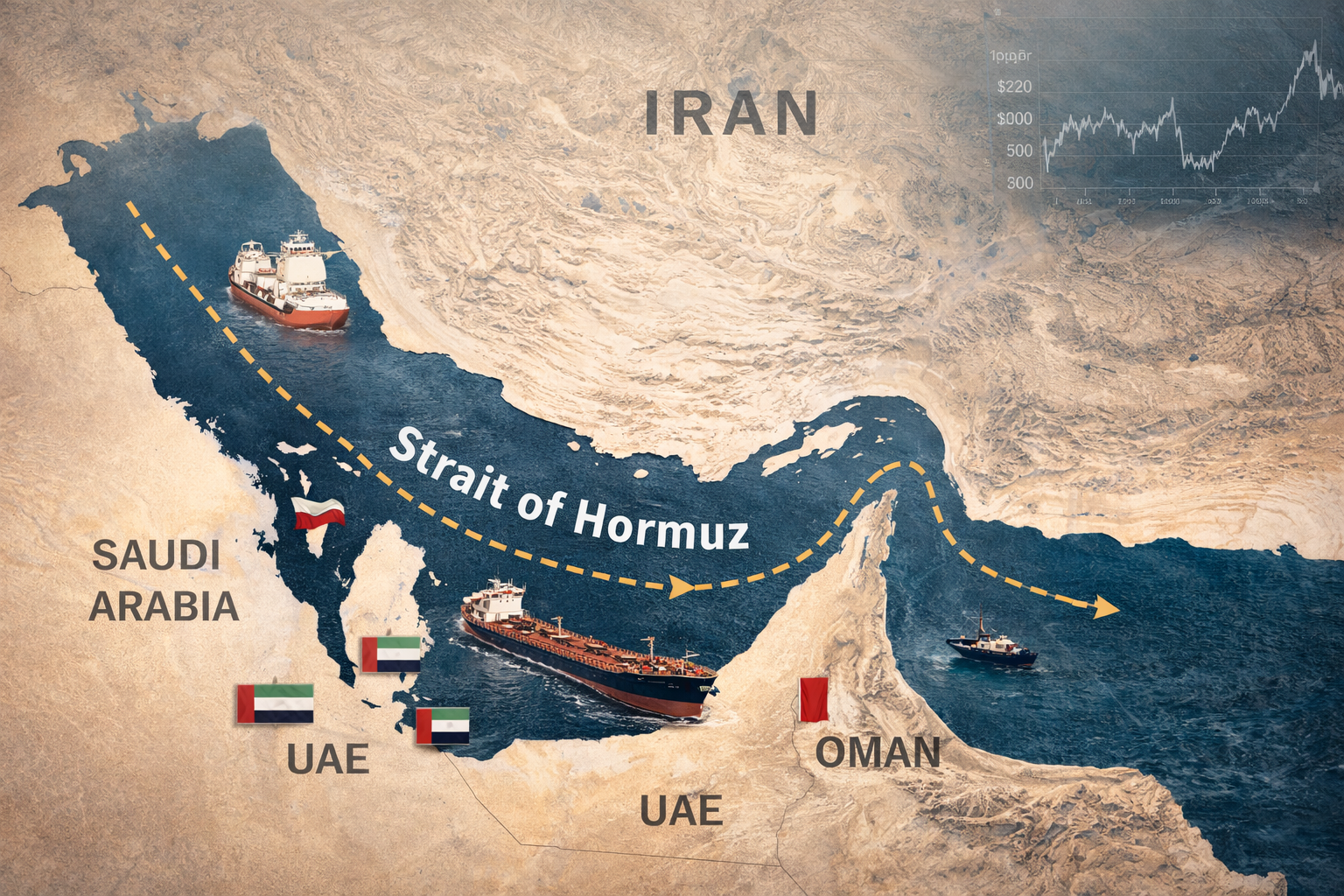
KUALA LUMPUR, Mar 1 – By the close of February 28, global markets were confronting a scenario few policymakers had fully modelled. Iranian state media reported that Supreme Leader Ayatollah Ali Khamenei had been killed in an Israeli airstrike in Tehran. Maritime agencies signalled that Iran had declared the Strait of Hormuz closed to commercial traffic. Dubai temporarily suspended flights as missiles crossed Gulf airspace.
Each development on its own would have unsettled markets. Together, they raised the prospect of a significant shock to global energy flows, aviation networks and financial stability.
The reported killing of Khamenei marks a historic escalation. Yet analysts caution against assuming institutional collapse within the Islamic Republic. Iran’s political and military architecture — particularly the Islamic Revolutionary Guard Corps (IRGC) — was built to withstand leadership transitions. Constitutional succession mechanisms exist, and any new leadership is widely expected to consolidate authority within existing security structures rather than weaken them.
For markets, however, the more immediate concern lies at sea.
Approximately 20 to 21 million barrels of oil per day — close to one-fifth of global daily consumption — pass through the Strait of Hormuz, according to the US Energy Information Administration. It is the primary export corridor for Saudi Arabia, Iraq, Kuwait, the United Arab Emirates, Qatar and Iran. Qatar’s liquefied natural gas exports depend almost entirely on this route.
Even partial disruption has historically produced outsized price reactions. Investment banks have modelled scenarios in which sustained blockage could push Brent crude well above US$100 per barrel. Oil markets are highly sensitive to supply constraints; relatively small reductions in available supply can trigger disproportionate price movements.
While Saudi Arabia and the UAE possess limited bypass pipeline capacity, it covers only a fraction of normal export volumes. A prolonged closure would materially constrain global supply.
Energy risk is only one dimension. Aviation networks are equally exposed.
Dubai International functions as one of the world’s most important transit hubs, linking Asia, Europe, Africa and the Americas. Temporary suspension of operations reverberates immediately across long-haul routes. Airlines already operating on narrow post-pandemic margins face rising jet fuel costs, extended rerouting, higher insurance premiums and potential cash-flow strain. Aviation disruption compounds energy disruption, amplifying pressure across trade and services.
Reports of Iranian missile and drone activity targeting US-linked facilities across multiple Gulf states further elevate risk perception. Even where interceptions are successful, geographic spread matters. For Gulf economies whose growth models rest on stability, connectivity and investor confidence, prolonged insecurity alters capital sentiment quickly.
Speaking to TNS News, Prof Geoffrey Williams, Economist and Director, Williams Business Consultancy Sdn Bhd, said the economic consequences hinge primarily on duration rather than headline shock.

Prof Geoffrey Williams, Economist and Director, Williams Business Consultancy Sdn Bhd, speaking to TNS News.
He noted that the closure of the Strait of Hormuz and regional airports disrupts major global freight corridors. A short interruption would amount to logistical inconvenience. A prolonged shutdown, however, would begin to strain supply chains and carry measurable economic costs.
Oil markets, he said, were already adjusting. With prices breaching US$70 per barrel, he expects Brent crude to move into the US$80–US$90 range in the coming week if uncertainty persists.
For Malaysia, the impact is dual-edged. Higher oil prices would strengthen government revenue in Malaysia’s capacity as an energy exporter. At the same time, they would increase the fiscal burden of RON95 fuel subsidies and could add to inflationary pressures — though a relatively firm ringgit provides some cushion against rising import costs.
Williams characterised current market movements as volatility driven by rapidly evolving developments rather than a settled structural shift. That volatility, he suggested, is likely to persist until clarity emerges — potentially within days if the conflict de-escalates.
Central banks now face renewed uncertainty. The US Federal Reserve, European Central Bank and Bank of England had been cautiously navigating transitions toward easing monetary policy. A sustained rise in energy prices could complicate that path, reigniting inflationary pressures and delaying rate reductions. Higher borrowing costs for longer would tighten global financial conditions and restrain growth.
Asia remains particularly exposed. The region relies heavily on Gulf energy imports. Should the Strait remain materially restricted, supply constraints would feed directly into major importing economies such as Japan, South Korea, India and China. Secondary effects could extend to the Strait of Malacca, a critical artery for energy flows toward East Asia.
Currency markets would likely reflect safe-haven flows into the US dollar and gold, placing pressure on emerging market currencies, including the ringgit, rupiah and baht. Regional equity markets would open under strain.
The central question is whether this escalation proves temporary or structural. If maritime traffic normalises quickly and retaliation remains contained, markets may treat February 28 as a severe but short-lived volatility episode.
If disruption to Hormuz persists and regional exchanges deepen, the episode could trigger a broader reassessment of global energy security assumptions. Concentration risk in maritime chokepoints, aviation hub dependency and fragile monetary transitions have all been exposed simultaneously.
The global economy is not collapsing. But it is being tested.
Whether this moment becomes a brief shock or a lasting fracture will depend on how long energy flows remain constrained — and how quickly geopolitical escalation gives way to containment. – ENDS
Sources: Al Jazeera, Reuters, Bloomberg, CNN, Washington Post, US Energy Information Administration, UK Maritime Trade Operations, Vortexa. Exclusive interview: Professor Geoffrey Williams, Williams Business Consultancy, speaking to TNS News. Mar 1
TNS NEWS