


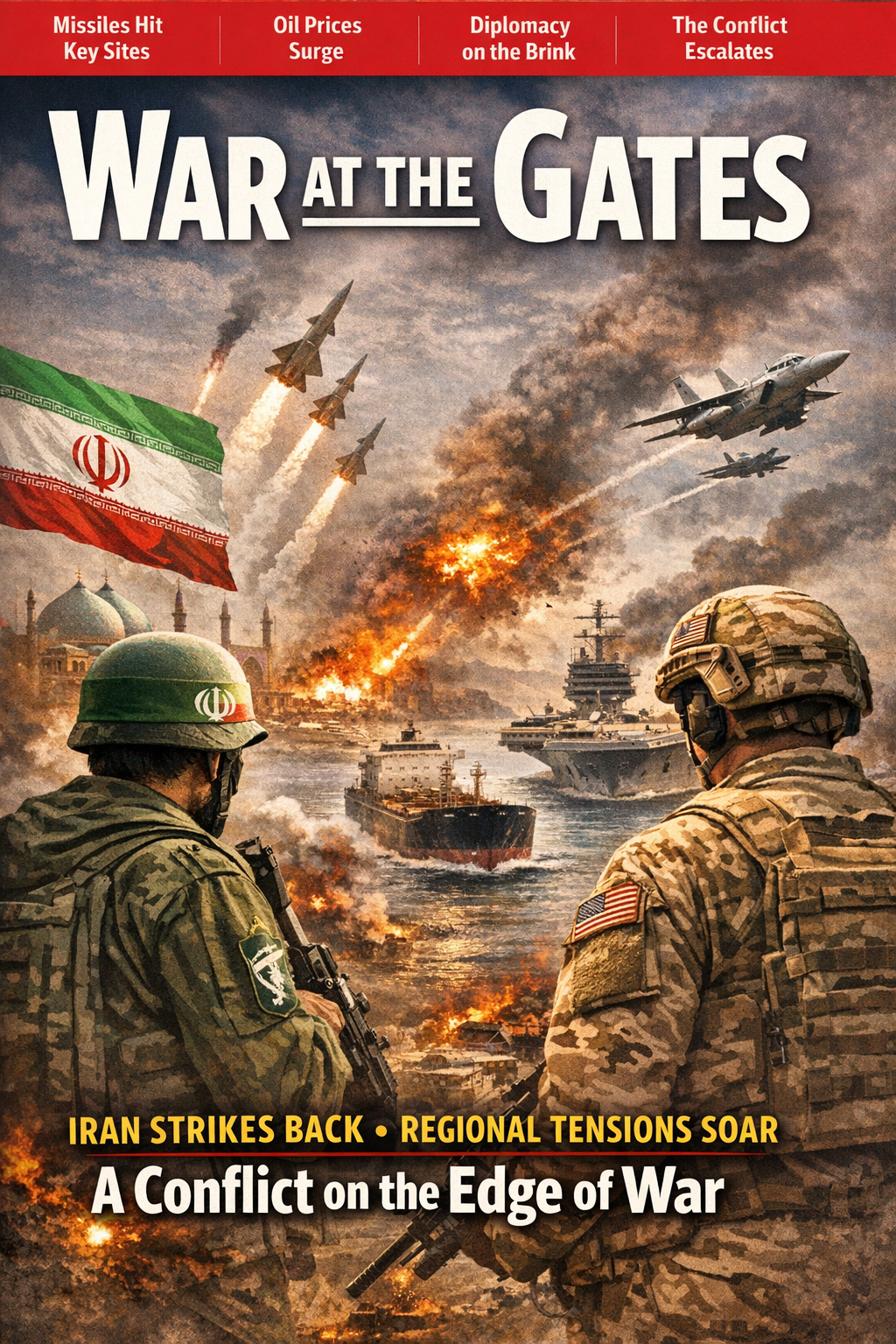
Iran–US War Day 28: IRGC Naval Chief Killed, Energy Strikes Deepen as War Edges Toward Uncertain Talks
FRIDAY, 27 MARCH 2026 | DAY 28 OF OPERATION EPIC FURY | VERIFIED EDITION v1.0
Editor’s Summary
Day 28 of Operation Epic Fury marks a decisive escalation in both military targeting and strategic stakes, as the war moves deeper into critical infrastructure and command leadership.
The reported killing of Iran’s IRGC Navy chief, Alireza Tangsiri, in a strike on Bandar Abbas represents one of the most significant blows to Tehran’s military command structure since the conflict began, directly targeting a central figure in the Strait of Hormuz blockade strategy.
At the same time, strikes on Isfahan and the South Pars gasfield — the world’s largest — signal a widening of the battlefield into core energy assets, pushing oil and gas markets further into instability.
Diplomatically, the war is entering a more complex phase. Indirect talks are now confirmed through intermediaries, yet positions remain far apart, with Washington advancing a broad settlement framework while Tehran responds with sweeping counter-conditions, including claims linked to the Strait of Hormuz.
Four weeks into the conflict, the trajectory is clear: military pressure is intensifying, economic disruption is deepening, and the outlines of negotiation are emerging — but without convergence.
Conflict Scorecard — 27 March 2026
2,200+ regional dead
1,937 killed in Iran
886+ killed in Lebanon
13 US soldiers killed
Military & Strikes
Israel carried out a pre-dawn strike on Bandar Abbas on 26 March, reportedly killing IRGC Navy commander Alireza Tangsiri along with senior officers. Israeli officials described him as a key architect of Iran’s maritime strategy in the Strait of Hormuz. Iran had not formally confirmed the death at the time of writing. If confirmed, the strike would represent a significant disruption to Iran’s naval command structure, though not necessarily its operational capacity in the waterway.
Strikes across Iran intensified further on Thursday, with Isfahan targeted in what Israeli sources described as operations against arms-related infrastructure. In a notable escalation, the South Pars gasfield — a critical component of global gas supply — was also struck, reinforcing the shift of the conflict into energy infrastructure.
Iran continued retaliatory operations, claiming large-scale missile strikes across multiple Israeli locations. Israeli authorities reported limited casualties and said interceptions remained largely effective. Independent verification of strike scale and impact remains limited.
Across the region, the pattern of multi-directional attacks persisted. Air defence systems in Gulf states continued intercepting drones, reflecting sustained pressure on energy-producing regions.
Diplomatic & Political
Diplomatic activity has entered a more visible but still fragile phase. Pakistan has confirmed it is acting as an intermediary between Washington and Tehran, marking the first public acknowledgment of indirect communication channels.
Reports indicate the United States has presented a broad proposal involving sanctions relief and nuclear-related conditions. Iran has responded with a set of demands that include a halt to military operations, guarantees against future conflict, and wider regional conditions. Some of these positions — particularly claims linked to the Strait of Hormuz — remain fundamentally incompatible with established international norms.
President Donald Trump said Iran was seeking a deal, while simultaneously indicating that further military action remained on the table. Iranian Foreign Minister Abbas Araghchi rejected the claim, reiterating that Tehran has not requested a ceasefire.
Public sentiment in the United States appears to be shifting. Recent polling suggests a majority of Americans now question the decision to engage in military action, adding a domestic political dimension to the conflict.
Energy, Markets & Regional
Energy markets reacted sharply to the latest escalation. Strikes affecting the South Pars gasfield, combined with continued disruption in the Strait of Hormuz, have pushed oil and gas prices higher.
Brent crude remains elevated, reflecting sustained supply concerns and uncertainty over transit routes. Despite official reassurances from US officials that markets remain adequately supplied, industry assessments point to significant structural disruption.
Shipping continues to reroute away from the Gulf, increasing costs and delays. More than 20,000 seafarers are reported to be stranded in the wider region, underscoring the operational strain on global trade routes.
Security risks are also expanding. Kuwait reported uncovering a network linked to Hezbollah, while Saudi Arabia intercepted multiple drones targeting its eastern oil-producing region. Iran-linked warnings of potential strikes on US-associated infrastructure further heighten the risk environment.
Humanitarian & Regional
The humanitarian toll continues to rise. Fatalities in Iran are approaching 2,000, with independent estimates suggesting a significant proportion of casualties are civilians, including minors.
In Lebanon, the death toll has exceeded 886, with widespread displacement and damage to infrastructure.
Healthcare and civilian facilities across affected areas have sustained repeated damage, according to international monitoring bodies. Reports of strikes affecting residential areas continue, though full verification remains challenging due to access limitations
TNS News Editorial Opinion — Day 28
Twenty-eight days into Operation Epic Fury, the outlines of a diplomatic endgame are visible — but the distance between the parties remains substantial.
Indirect talks are under way. Messages are being relayed. Positions are being tested. These are not the signals of a war without an exit, but of one where the political cost of acknowledging negotiation remains too high.
Yet the gap is structural. Iran’s position reflects the leverage it believes it has gained through sustained disruption of the Strait of Hormuz. The United States, bound by international norms and strategic interests, cannot accept that framing.
The killing of a senior naval commander may disrupt command structures, but it does not alter the underlying reality: the Strait remains vulnerable, and the tools of disruption remain in place.
For Malaysia and ASEAN, the implications are immediate and increasingly tangible. The Strait of Hormuz is central to global energy flows that directly affect regional economies. Rising fuel costs, shipping disruptions and financial volatility are already feeding through into domestic conditions.
The absence of a coordinated ASEAN response after four weeks of conflict risks becoming a strategic gap. When the post-war framework is eventually negotiated — on energy flows, maritime security and regional investment — those not present at the table will have little influence over the outcome.
The war has reached a point where it cannot continue indefinitely without escalating costs — but cannot yet end without political compromise. That is the space in which the next phase will be decided.
Tomorrow’s Watch List — 28 March 2026
Developments in indirect US–Iran communications through intermediaries
Any confirmation or denial from Tehran regarding the reported killing of IRGC naval leadership
Potential Iranian response to strikes on Bandar Abbas and South Pars
Stability of energy markets and shipping routes through the Strait of Hormuz
Signals of coordinated diplomatic positioning from ASEAN or major regional economies – TNS NEWS
Sources
Al Jazeera, CNN, NPR, Washington Post, Times of Israel, Euronews, CNBC, CBS News, Pew Research, UPI, official government statements and regional authorities