



By TENGKU NOOR SHAMSIAH TENGKU ABDULLAH
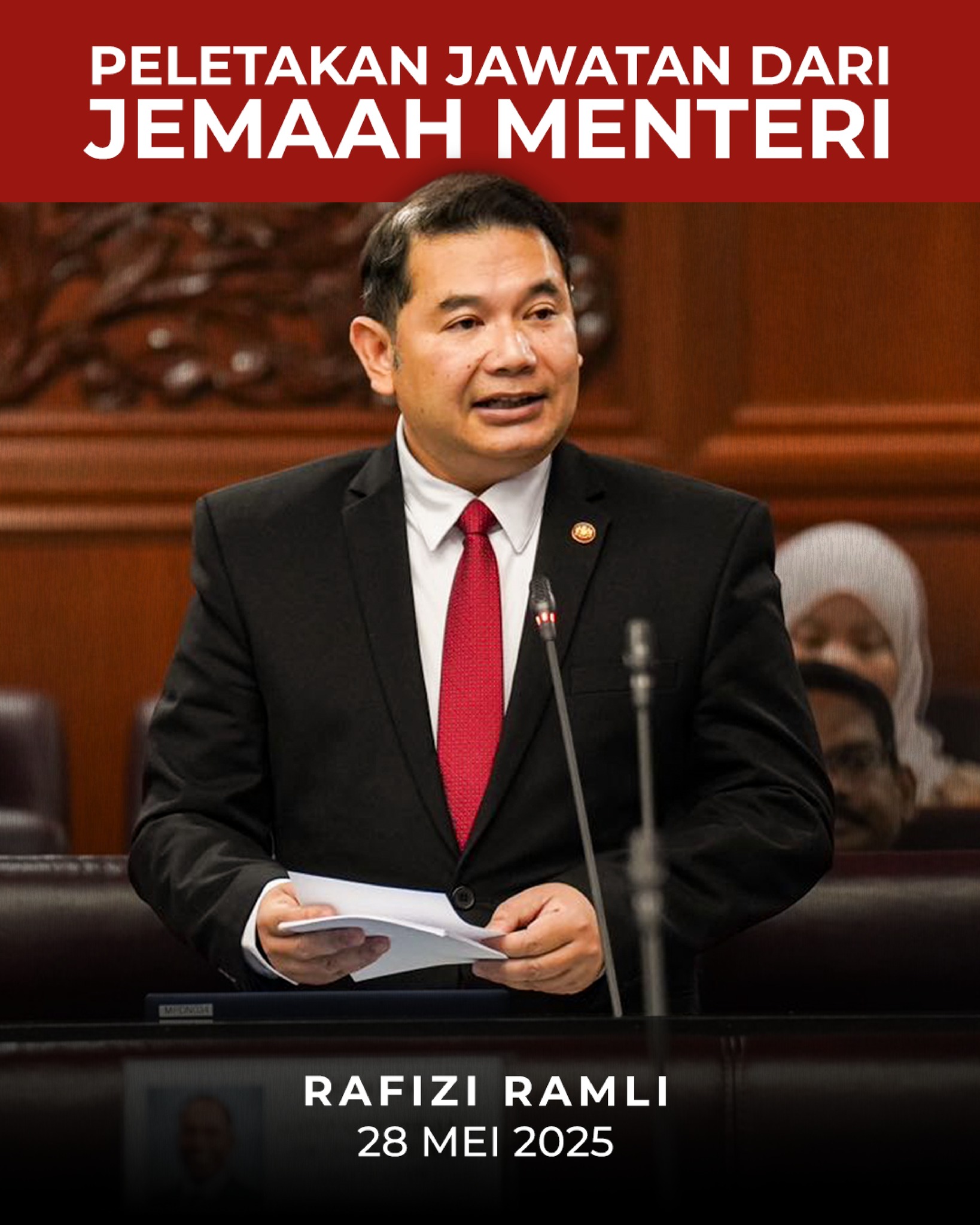
KUALA LUMPUR – Prime Minister Datuk Seri Anwar Ibrahim has accepted the formal requests for leave and resignation from two Cabinet members — Minister of Economy Rafizi Ramli and Minister of Natural Resources and Environmental Sustainability Nik Nazmi Nik Ahmad — following their respective announcements today.
In a brief media statement, the Prime Minister’s Office confirmed that both ministers had submitted letters seeking to step down from their Cabinet roles, with leave granted ahead of their official resignation dates. Rafizi’s resignation will take effect on 17 June 2025, while Nik Nazmi’s will be effective from 4 July 2025.
The statement added that any further decisions related to the matter will be announced by the Prime Minister in due course.
Politically-Driven Exits
Both resignations come in the wake of internal party shifts following the recent PKR elections, in which both ministers lost their positions within the party leadership. In his statement, Rafizi explained that the defeat meant he no longer had the party’s mandate to carry forward its reform agenda in government.
“I joined politics to usher in a culture of accountability and people-centric governance,” Rafizi wrote on Facebook. “Just as in other democracies, leaders who lose internal party contests should step aside to make way for those with a renewed mandate.”
Rafizi’s departure comes after the completion of a major national planning milestone — the 13th Malaysia Plan (RMK13), which he confirmed has been finalized and is ready for tabling in Parliament. He expressed hope that structural education reforms embedded in RMK13 would be retained by the Cabinet even after his departure.
“I’m proud of the progress we made, and I have faith in the civil service to carry on implementing the reforms we’ve built,” he added.

Reform Track Record
Nik Nazmi, who led the climate and environmental portfolios since December 2022, also cited his party leadership loss as the reason for his resignation. “My appointment to Cabinet was based on my previous role as a PKR Vice President. Since I no longer hold that position, I believe it is appropriate to resign,” he stated.
During his tenure, Nik Nazmi spearheaded several key reforms, including amendments to the Environmental Quality Act, the introduction of the Energy Efficiency and Conservation Bill, and initiating Malaysia’s first National Climate Change Bill (RUUPIN), which is now in its final drafting stages.
He also led Malaysia’s submission of the National Biodiversity Strategies and Action Plan (NBSAP) and earned praise from UN Secretary-General António Guterres for the country’s success in reducing deforestation.
“I now look forward to focusing on my duties as the Member of Parliament for Setiawangsa and continuing to serve the public in a different capacity,” he said.
Implications and Transition
While the resignations were not entirely unexpected following the PKR internal polls, they mark a significant transition point for the Unity Government, particularly as Malaysia gears up for the second half of the Madani Economic Agenda and key legislative milestones like RMK13.
The Prime Minister’s Office did not announce interim replacements, but analysts expect a reshuffle or new appointments before the next Parliament sitting.
Both Rafizi and Nik Nazmi’s exits also set a precedent for political accountability within Malaysia’s Cabinet — a move that may strengthen perceptions of democratic maturity within the current administration.
- TNS News