



By TENGKU NOOR SHAMSIAH TENGKU ABDULLAH
KUALA LUMPUR, MARCH 4 – As Malaysia prepares to host Visit Malaysia 2026, the country is positioning itself as a key player in ASEAN’s tourism expansion. This ambitious initiative is expected to drive regional collaboration, boost tourism revenue, and attract high-value travelers to the country.
Additionally, the six-country tourism initiative—comprising Malaysia, Thailand, Indonesia, Vietnam, Cambodia, and Laos—presents a significant opportunity for regional economic integration, cross-border tourism, and business growth.
In an exclusive interview with TNS News, Tunku Dato’ Seri (Dr) Iskandar Bin Tunku Abdullah, Group Executive Chairman of Melewar Group and Executive Board Member of the Pacific Asia Travel Association (PATA), shared his insights on how Malaysia can maximize the economic and business benefits of Visit Malaysia 2026 while leveraging ASEAN partnerships.

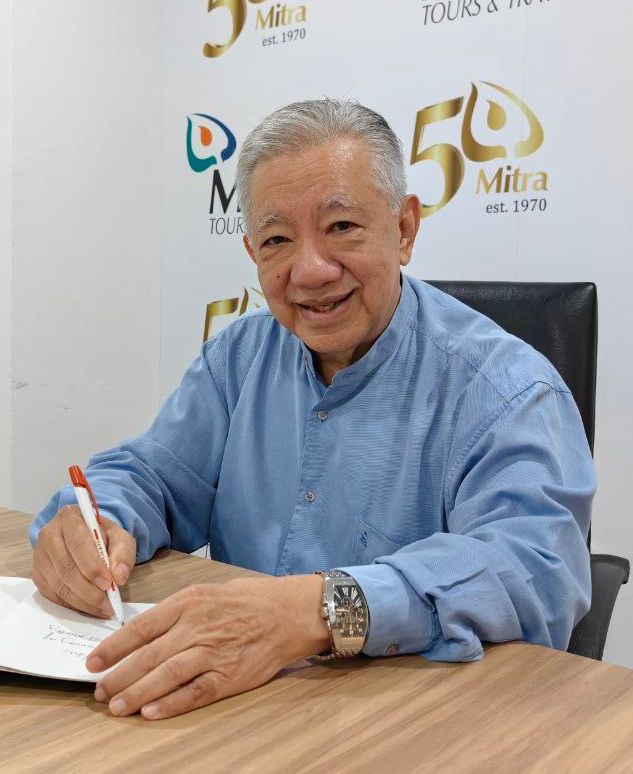
Tunku Dato’ Seri (Dr) Iskandar Tunku Abdullah – Group Executive Chairman of Melewar Group
Empowering Local Businesses and SMEs
Tunku Iskandar, who also serves as Group President of Melewar Group’s tourism-related companies—including Mitra Travel & Tours, Mitra Kembara, Pacific World Travel, APG Malaysia, and World Express Malaysia—stressed the importance of ensuring that local businesses, SMEs, and community-based tourism operators benefit from the initiative.
“The government and NGOs must work together to educate SMEs and local communities about the economic and social benefits of this initiative,” he said. “Capacity-building programmes, investor training, and financial support for entrepreneurs in the tourism sector will be crucial.”
With over 40 years of experience in the tourism industry, Tunku Iskandar has played a pivotal role in numerous tourism associations, including serving as past Chairman and current Executive Board Member of PATA, former President of the ASEAN Tourism Association (ASEANTA) and the Federation of ASEAN Travel Association (FATA), and Founder Chairman of the National Tourism Council of Malaysia (NTCM).
Strengthening Malaysia’s Tourism Policies
With Malaysia gearing up for Visit Malaysia 2026, a strong and stable investment climate is critical for the success of the initiative. However, Tunku Iskandar warned against inconsistent policies that could deter investors.
“The government must avoid a ‘hot-cold-hot-cold’ approach to tourism investment. Stability and long-term commitment are essential to attract serious investors who are willing to contribute to Malaysia’s tourism infrastructure and promotional efforts,” he emphasized.
As a current Board Member and Regional Vice President (APAC) of APG Global Associates Network (APG-GA), Tunku Iskandar has witnessed how fluctuating tourism policies have impacted regional growth. He advocates for continuity in investment strategies to sustain momentum beyond 2026.
Attracting High-Value Tourists
Malaysia and its ASEAN counterparts have long aspired to attract high-value tourists, particularly in niche sectors such as medical, wellness, and luxury tourism.
However, the primary success metric often remains the sheer volume of tourist arrivals rather than actual spending per visitor.
“Most countries aim for high-value tourism, but at the end of the day, they end up competing over who gets the highest number of tourist arrivals. What we need is a shift in focus—from quantity to quality—by prioritizing tourism revenue and expenditure over just arrival numbers,” he stated.
Collaboration and Policy Development
Tunku Iskandar also addressed key policy and infrastructure challenges, including the ASEAN Single Aviation Market (ASAM) and the proposed ASEAN Common Visa.
A key component of enhancing intra-ASEAN connectivity is the expansion of air travel rights. Tunku Iskandar highlighted that a more seamless aviation framework, such as ASAM, could significantly boost regional tourism.
In this regard, the AirAsia Group is well-positioned to capitalize on these opportunities, as it operates locally registered airlines in each ASEAN country. This strategic presence allows AirAsia to connect not only the capitals but also secondary cities, facilitating greater accessibility and encouraging tourism beyond traditional hotspots.
While ASAM aims to improve air connectivity, he noted that not all ASEAN countries have signed off on open skies agreements, citing concerns over competition between airlines.
Similarly, the ASEAN Common Visa has been discussed for years but has yet to materialize due to economic disparities among member states. “Perhaps a step-by-step approach could work, starting with Malaysia, Singapore, and Thailand before expanding to other ASEAN nations,” he suggested.
Digitalization and Smart Tourism
Malaysia has invested heavily in digitalization, smart tourism, and cashless transactions to enhance the traveler experience. Tunku Iskandar believes that sharing best practices and innovations among ASEAN countries could strengthen the region’s position as a top global tourism destination.
“Closer collaboration on digital payment platforms, e-visas, and smart tourism strategies can significantly improve the overall visitor experience and make intra-ASEAN travel more seamless,” he said.
Ensuring Sustainable Growth
Tunku Iskandar, who formerly chaired the Indian Ocean Tourism Organisation (IOTO), also highlighted the importance of sustainable tourism policies, citing the adverse effects of over-tourism in destinations such as Bali, Phuket, and Venice.
“We must spread tourism activity beyond popular hotspots and implement capacity guidelines to prevent overcrowding. A balance between economic benefits and environmental and cultural preservation is key,” he stressed.
A Call for Public-Private Partnerships
A major challenge in sustaining long-term tourism cooperation in ASEAN is the lack of tailored financial support for the tourism industry.
According to Tunku Iskandar, the banking sector often fails to understand the unique financing needs of tourism businesses.
“A Tourism Development Bank could be an innovative solution to bridge this gap. Additionally, an ASEAN Tourism Development Institute could foster research and policy development to support the region’s growing tourism sector,” he proposed.
Conclusion
With the right policies, investment stability, and strong public-private partnerships, Visit Malaysia 2026 has the potential to transform the nation’s tourism industry and strengthen its position within ASEAN.
The six-country tourism initiative further enhances regional economic integration, encouraging greater cross-border travel and business collaborations.
As Malaysia takes the lead in shaping regional tourism, industry leaders like Tunku Iskandar remain instrumental in guiding the sector toward sustainable and high-value growth.
As Malaysia prepares for Visit Malaysia 2026, maintaining a long-term vision and fostering regional cooperation will be critical in ensuring that the country reaps the full economic benefits of this ambitious initiative.
- TNS NEWS