


By TENGKU NOOR SHAMSIAH TENGKU ABDULLAH

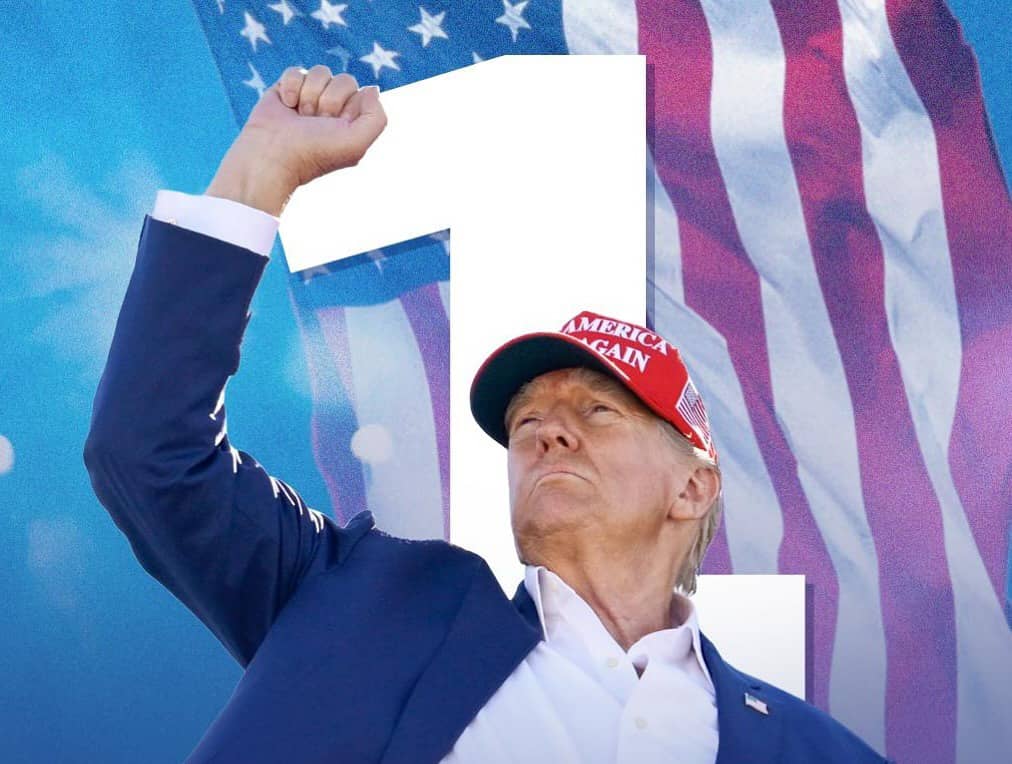
US President Donald Trump – File picture
KUALA LUMPUR, April 7 – The resurgence of United States President Donald Trump’s tariff agenda presents a significant challenge to the global trading system.
The reverberations of his previous trade policies still echo through global markets, and the prospect of a second term has businesses and nations bracing for impact.
While campaign rhetoric is often diluted by the realities of governance, Trump’s consistent emphasis on “America First” protectionism suggests a renewed push for tariffs, a policy that, while aimed at bolstering domestic industries, often triggers unintended consequences.
The core argument for tariffs, as articulated by Trump in his previous term, centers on rectifying perceived trade imbalances and protecting American jobs.
However, history paints a less rosy picture. As seen during the 2018-2019 trade war with China, retaliatory tariffs often escalate, disrupting supply chains and increasing costs for consumers.
As reported by Investing.com, “China hits US with $34 tariff in retaliation, markets slide accelerates,” highlighting the immediate market instability caused by such measures. Such actions can lead to a domino effect, impacting not just the targeted nations but also their trading partners.
In a move that has sent ripples through global trade, Trump, now serving his second term, has announced a reciprocal tariff policy targeting nations that have previously retaliated against U.S. trade measures.
This policy shift has placed ASEAN, and particularly Malaysia, under the microscope as they navigate the evolving trade landscape.
Prime Minister Datuk Seri Anwar Ibrahim has demonstrated unwavering resolve in addressing this new challenge.
On April 2, the United States announced sweeping tariffs affecting its imports from almost the entire world. Malaysia is among those affected.
From April 5, every Malaysian product shipped to the US will face at least a 10 percent duty; from 9 April, most will face a 24 percent rate, with some exemptions.”
The prime Minister emphasized, “As an open trading nation, Malaysia deems the unilateral decision on reciprocal tariffs as a major threat to the current global trade and investment system.”
Anwar Ibrahim’s statement underscores the potential damage to the international trade framework.
He argues that “the MADANI government firmly holds the view that the imposition of additional tariffs on every country that trades with the United States constitutes a rejection of the principles of free, non-discriminatory, predictable and open trade under the World Trade Organization.
This organization was established by, among others, the US itself in 1948 through the General Agreement on Tariffs & Trade (GATT).”
This highlights a fundamental contradiction: the US, a key architect of the global trade system, now appears to be undermining its core principles. It is important to note that the World Trade Organization (WTO) officially commenced on 1 January 1995.
Adding to this, Minister of Investment, Trade and Industry, Datuk Seri Tengku Zafrul Aziz, stated, “Malaysia is determined to be a reliable trading partner. Malaysia has always been open to trade and investment. We are committed to all major trading partners, including the US and China.”
While some sectors might see partial relief, as Anwar points out, “While some exemptions partially shield semiconductors, which is Malaysia’s largest export category to the US, nevertheless, these new tariffs will still adversely impact many of our Malaysian industries including textiles, furniture, rubber and plastics.”
Tengku Zafrul further clarified the Malaysian stance, saying, “The Government refutes the claim that Malaysia has imposed a 47% tariff on US imports into Malaysia.
Malaysia strongly disagrees with the basis of this tariff calculation and is seeking clarification on the calculation. This inaccurate basis of calculation has resulted in Malaysia being imposed a reciprocal tariff of 24%.”
The Prime Minister also addressed the concerns of domestic industries, stating, “The MADANI government understands the concerns, anxieties and difficulties faced by the workers, manufacturers and businesses in these sectors, and we affirm our determination to overcome and adapt to this challenge.”
He further elaborated on the broader implications, saying, “We are taking these tariffs seriously because it challenges the fundamental principle of non-discrimination underpinning global trade rules.
Further, it strikes at the heart of Malaysia’s identity as a proud nonaligned trading nation, affecting the livelihoods and economic security of countless Malaysians who depend upon open and fair access to international markets.”
Anwar also directly refuted the U.S. justification for the tariffs, stating, “We refute the claim by the US authorities that Malaysia has imposed a 47% tariff on US imports into Malaysia. The basis for calculating this tariff is fundamentally flawed, which has inaccurately resulted in Malaysia being imposed a reciprocal tariff of 24%.”
Despite the gravity of the situation, Anwar emphasized a measured and strategic response: “Yet, our response will be calm, firm and guided by Malaysia’s strategic interests. Our goal is clear. We are fully committed to securing a favourable resolution that preserves vital market access, attract continued foreign investment, and support the well-being of Malaysian workers and businesses. Malaysia will not introduce retaliatory tariffs.”
He further added, “In the spirit of maintaining positive and progressive relations with all trading partners, the MADANI government will engage constructively with the US to safeguard vital market access, preserve investor confidence and secure fair outcomes for our exporters.
In short, we must find a mutually acceptable, fair and equitable solution to this problem.”
Tengku Zafrul reiterated this, saying, “Malaysia is fully committed to achieving a solution that will maintain market access, attract continued foreign investment, and support the well-being of Malaysian workers and businesses. Accordingly, for now, Malaysia will not take any retaliatory action.”
The impact on ASEAN and Malaysia extends beyond direct trade. Indirectly, the uncertainty created by potential tariff wars can deter foreign investment, stifle economic growth, and create market volatility.
Anwar outlined the steps being taken by the Malaysian government. “Some of these efforts are already underway. Our trade and foreign ministries are analyzing impacts in detail, running simulations, consulting stakeholders across industries and communicating directly with US government counterparts as well as American firms which have long operated in Malaysia.”
He also acknowledged the potential economic impact, stating, “If the 24% tariff were implemented, from an economic perspective, the 2025 GDP growth projection of 4.5 – 5.5% will need to be reviewed.
The prime minister reassured that the Government does not foresee a recession in Malaysia and the economy remains resilient.
Tengku Zafrul also noted the impact on Malaysia’s GDP, saying, “The Government has already announced that the 2025 GDP growth of 4.5 -5.5% will be reviewed.
This will be based on a more thorough impact assessment report. For now, the Government expects economic growth to continue. Our household spending is resilient; our domestic investment is strong; our tourism receipts are robust, and national master plans are being implemented.
Malaysia is leveraging its diverse trade relationships, as emphasized by Anwar: “Our trade is built upon a diversified network of regional and global partnerships consolidated over many years – including through ASEAN, the Comprehensive and Progressive Agreement for Trans-Pacific Partnership (CPTPP), the Regional Comprehensive Economic Partnership (RCEP), and ongoing negotiations with the European Union and deepening ties across the Global South.”
The Malaysian government has taken decisive steps, including “the establishment of the National Geo-economic Command Centre (NGCC), which I chair,” according to Anwar Ibrahim.
Tengku Zafrul provided further details on the government’s actions: “The National Geo-economic Command Centre (NGCC), chaired by the Prime Minister himself, has been activated. MITI is conducting an impact study on key export sectors to the US, and the NGCC will consider the findings of this study at its next meeting in the near future.”
Tengku Zafrul also outlined the establishment of a task force: “MITI itself will develop a task force to gather feedback from all stakeholders. This is to ensure that Malaysia’s exports and investments are not severely affected by the US unilateral action.
MITI will meet with representatives from industry bodies and exporters associations. MITI will also engage with relevant Ministries and agencies such as the Ministry of Finance, the Ministry of Economy, BNM, MIDA, MATRADE, DOSM and others.
MITI will take a comprehensive approach in considering the various options available.”
Regional cooperation is also a key strategy. As Anwar noted, “At the regional level, we will strengthen our collaboration with our ASEAN neighbours.
ASEAN nations are amongst the countries hit with the highest US tariffs. Malaysia, as ASEAN Chair, will lead efforts to present a united regional front, maintain open and resilient supply chains, and ensure ASEAN’s collective voice is heard clearly and firmly on the international stage.”
Tengku Zafrul added, “At the ASEAN level, the ASEAN Economic Ministers will convene a special meeting on April 10, chaired by myself. We will discuss the implications of the US tariffs on regional trade and investment flows; macroeconomic stability; and a coordinated ASEAN response.
Subsequently, ASEAN Leaders will meet to discuss ASEAN’s direction in addressing and mitigating the potential disruptions to regional trade, supply chain networks, and investment flows into the region.”
Bilateral engagement is also a priority. Tengku Zafrul stated, “Strategic engagement at the highest level with the US will continue.
The Malaysia-US Trade & Investment Framework Agreement (TIFA) will be utilized.
MITI will also consider having a technology safeguard agreement, to protect Malaysia’s semiconductor & aerospace exports.
Sectoral exemptions will be negotiated. This morning, I met with the US Ambassador and further negotiations will be conducted.”
Market diversification and utilization of trade agreements are other key strategies. Tengku Zafrul noted, “For several years now, MATRADE has begun to diversify and expand Malaysia’s export markets.
This includes markets in the Middle East (including through MIHAS), Africa and South America.”
He also detailed efforts to strengthen trade agreements: “MITI will enhance the utilization of all Free Trade Agreements (FTAs).
Other FTA-related efforts include: a. Signing the Comprehensive Economic Partnership Agreement (CEPA) with the UAE (14 Jan 2025) – aimed at boosting bilateral trade and investment, with a projected 60% increase in trade volume within five years.
This is Malaysia’s first FTA with a Gulf Cooperation Council (GCC) member. b. Resumption of FTA negotiations with the European Union (EU).
c. FTA negotiations with South Korea. d. Upgrading the ASEAN Trade in Goods Agreement (ATIGA) during Malaysia’s ASEAN Chairmanship, and various other ASEAN-level FTA agreements, including with China and India.
e. Negotiations for the Malaysia-European Free Trade Association (EFTA – Iceland, Liechtenstein, Norway and Switzerland) Economic Partnership Agreement.”
Tengku Zafrul also acknowledged the potential negative impacts and the government’s preparedness:
“We need to be frank – the direct impact of this challenge is in terms of Malaysia’s GDP growth this year, and potentially in the coming years.
As one of the US’ largest trading partners in ASEAN, and also one of the leading destinations for foreign investment from the US, the implementation of tariffs will certainly have a medium to long-term impact.
This impact is expected to be broad-based because tariffs have also been imposed on almost every trading partner and investment source partner of Malaysia. If more countries implement retaliatory tariffs, a trade war across the globe would threaten global economic growth.”
He further detailed specific impacts, including potential benefits and risks: “Among other direct and indirect impacts:
a. Some Malaysian exports will be more competitive in global markets compared to some countries facing higher tariffs than Malaysia. The 24% rate can be considered moderate compared to Cambodia (49%), Indonesia (32%), Laos (48%), Myanmar (45%), Thailand (37%), Vietnam (46%), and China (34%).
Many analysts believe this makes Malaysia more attractive to US importers and companies seeking intermediate inputs or goods.
b. In terms of terms of substitution effect, Malaysia’s palm oil exports, for example, will become more competitive.
Demand may shift to Malaysia. Palm oil may also be more competitive compared to other vegetable oils.
c. The direct negative impact is in terms of reduced demand. When this happens, revenue will decrease and jobs in the export sector will be affected. When demand decreases, investment and spending will also decrease.
All these factors will cause a decline in Malaysia’s GDP. If many countries face a similar situation, global growth will slow down.
d. Decreased demand from the US due to reciprocal tariffs could also lead our industries and markets to face dumping of imported goods from other countries that have surplus capacity. This will increase competition with local producers.”
Tengku Zafrul also provided sector-specific information: “For now, some exemptions protect the semiconductor sector (Malaysia’s largest export category to the US).
Critical minerals, pharmaceuticals and some energy-related products are also exempted. But many other sectors will be affected – such as machinery and equipment, furniture, rubber and plastics.”
He also shared initial feedback from investors: “In terms of approved investment, initial feedback from foreign and domestic investors:
a. Some stated that, for now, it is too early to assess the impact on their operations until the tariffs are implemented on April 9.
b. Several investors shared that their supply chains will be affected, especially in terms of contract manufacturing.
c. Some Malaysian investors are slowing down their business expansion plans, and are beginning to economize, while focusing on expanding markets in China, India and ASEAN.”
Tengku Zafrul concluded with a call for collaboration: “The MADANI government is determined to overcome this challenge, and MITI would like to invite all industry sectors, industry chambers and associations to work together with us in finding the best solutions for the country.
Whatever the situation, I want to assure the industry and the people that MITI will do its best to ensure that Malaysia’s interests are always protected. What is important is the well-being of the people and also our business/export sectors.”
Anwar Ibrahim concluded with a note of caution and resolve: “We must acknowledge that this round of sweeping tariffs may just be the beginning of greater challenges to come in the external economy.
We must all be mentally prepared to weather the potential storm ahead and work together as a nation to safeguard our continued prosperity.
But this government stands ready to address and mitigate them. We will do this, not alone and not confrontationally but in collaboration with friends and partners, and constructively.
Rest assured, the MADANI government would continue to prioritize the interests of Malaysia, our people, businesses and exporters.”
The resurgence of Trump’s tariff agenda presents a significant challenge to the global trading system, and ASEAN, including Malaysia, must prepare for potential disruptions.
While the allure of protecting domestic industries is strong, the interconnected nature of the global economy demands a more nuanced and collaborative approach.
As the world watches, the question remains: will the next chapter of Trump’s trade policy be a repeat of past disruptions, or will a more measured approach prevail?
- TNS NEWS