


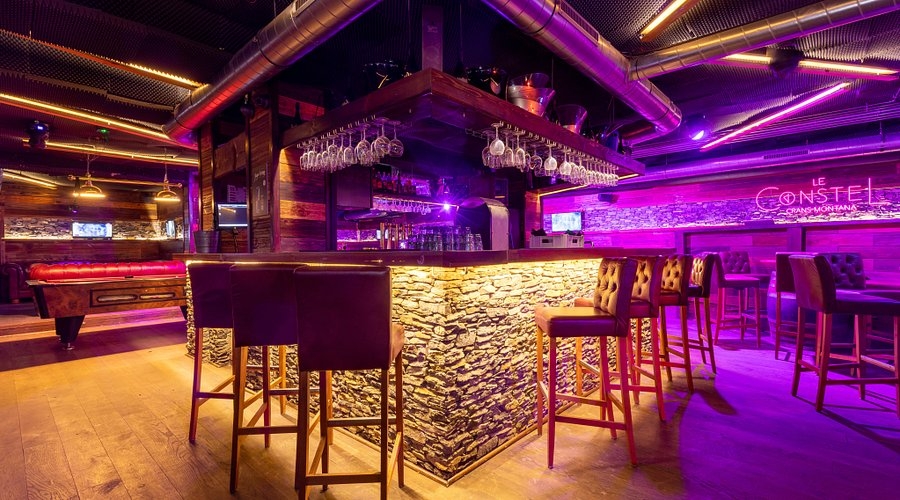
Image: Bar le Constellation Credit Social Media
Opinion & Analysis | TNS News
By TNS Editorial Team
The Alpine resort town of Crans-Montana is synonymous with snow-capped beauty, luxury winter holidays, and celebration. But in the early hours of January 1, 2026, that image was violently shattered. A fire engulfed a packed basement bar, turning a moment of jubilation into a scene of terror within seconds.
What followed was one of the deadliest nightlife fires in modern European history—a stark reminder that safety regulations “written in blood” are worthless if not enforced with absolute vigilance.

The Incident: Seconds That Changed Hundreds of Lives
Shortly after 1:30 AM, a blaze erupted inside Le Constellation bar, where hundreds—many of them teenagers—were gathered to welcome the new year. According to Swiss investigators and eyewitness accounts, the fire ignited when “fountain-style” sparklers attached to champagne bottles came into contact with flammable acoustic foam on the low ceiling.
The venue, located in a basement with restricted exits, became a death trap almost instantly. A phenomenon known as a flashover—the near-simultaneous ignition of combustible gases—engulfed the space in less than ten seconds.
Authorities have confirmed 40 fatalities and 116 injuries. The victims were overwhelmingly young, with the youngest confirmed fatality just 14 years old. Families from Switzerland, France, Italy, Britain, Belgium and beyond have returned home not with memories, but with ashes—a cruel globalization of grief.
A Pattern of Preventable Catastrophe
The Crans-Montana tragedy is not an isolated incident; it is a grim echo of a pattern seen repeatedly over the last two decades:
- Station Nightclub (USA, 2003): 100 dead. Indoor pyrotechnics + flammable foam.
- Santika Club (Thailand, 2009): 67 dead on New Year’s Eve. Indoor fireworks + restricted exits.
- Kiss Nightclub (Brazil, 2013): 242 dead. Basement venue + toxic smoke + blocked exits.
- Colectiv (Romania, 2015): 64 dead. Indoor fireworks + acoustic foam.
Across continents and decades, the formula for disaster remains identical: Pyrotechnics + Enclosed Spaces + Flammable Materials + Overcrowding = Mass Fatality. Switzerland, a nation regarded for its precision and strict order, is now facing the uncomfortable reality that even the best laws on paper are useless without rigorous, unannounced enforcement on the ground.
The Moral Question of Accountability
Swiss prosecutors have opened a criminal investigation into the owners of Le Constellation. The focus is not just on the sparklers, but on the systemic failures that allowed them to be dangerous.
- Exits: Were emergency doors locked or used for “building access control,” as some former staff suggest?
- Inspections: Why had the venue reportedly gone years without a formal fire safety audit?
- Capacity: Was the basement holding double its legal limit of 300 people?
What Must Change: The TNS Call to Action
Tragedies only become “lessons” if we act. As Malaysia moves through 2026 with its own booming nightlife and tourism sectors, we must implement five non-negotiable reforms:
- A Total Ban on Indoor Pyrotechnics: “Bengal fountains” and sparklers add 30 seconds of visual flair but can kill hundreds in minutes. They have no place in enclosed venues.
- Basement-Specific Safety Thresholds: Underground venues amplify every risk. Smoke concentrates faster, and heat builds exponentially. Licensing for basement clubs should require dual independent exits and automated suppression systems.
- Real-Time Crowd Monitoring: In 2026, technology exists to prevent overcrowding. Digital headcounts linked to licensing authorities should be mandatory for high-capacity venues.
- Peak-Season Audits: Holiday periods—New Year’s Eve, festivals, and concerts—are precisely when corners are most likely to be cut. Safety inspections should increase during these periods, not disappear.
- Strict Age-Control Responsibility: If a venue admits minors (16 is the legal age for beer/wine in Switzerland), it assumes a “duty of care” that cannot be ignored.
The Malaysian Context
We cannot afford to be complacent. In the packed basements of Kuala Lumpur, Johor, and Penang, indoor fireworks and celebratory flames remain a common sight. We must ask ourselves: Are we confident that our enforcement is robust enough to prevent a Crans-Montana here?
The honest answer should give us pause.
In Crans-Montana, sparklers were meant to symbolize light. Instead, they exposed how fragile safety becomes when celebration outpaces responsibility. As Switzerland holds its five days of mourning, the rest of the world must pay attention. History shows us that if lessons are not learned, tragedies are not unique—they are rehearsals.
We owe it to the 40 lives lost in Le Constellation to ensure that candles only ever light memorials, never ignite them. – TNS NEWS