



By: ABDUL RAZAK CHIK
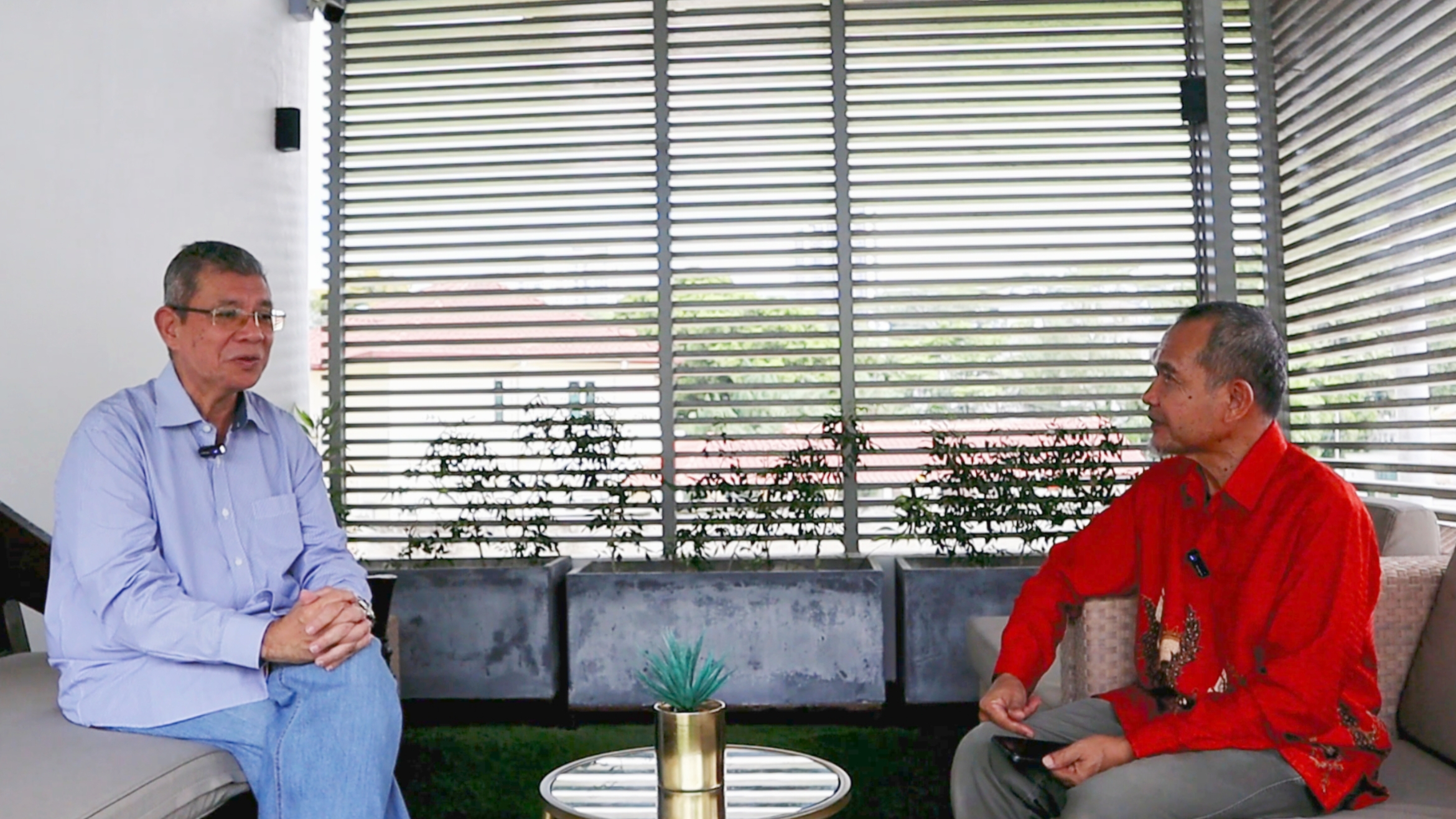
KUALA LUMPUR, April 25 – As Malaysia chairs ASEAN in a critical year marked by two summits in May and October, former Foreign Minister Datuk Seri Saifuddin Abdullah offered a comprehensive and thought-provoking perspective on the bloc’s future, regional stability, and the role of diplomacy in international justice.
In an exclusive interview with seasoned journalist Abdul Razak Chik, the Indera Mahkota assemblyman—widely respected for his diplomatic acumen—called for adaptive reforms within ASEAN, urging a balance between unity and pragmatism, while emphasising constructive leadership in navigating global turbulence.
Consensus, with Care: “One Country Can’t Block Nine”
Saifuddin began by dissecting ASEAN’s traditional consensus model, which he argued has too often stalled meaningful action during crises.
“We are united when it comes to peace and security, but the question is—where do we go from here?” he asked rhetorically.
He proposed a “10 minus X” formula—suggesting ASEAN must be able to move forward even when one country objects, especially in cases like Myanmar, where the spillover impacts are regional.
“Simply because one country doesn’t agree, the whole nine get rejected,” he said. “Do you ignore the concerns of X, or do you ride roughshod over what X is looking for? I don’t think it’s about ignoring—it’s about care.”
He referenced the African Union’s principle of “non-indifference” as a model ASEAN could adapt.
“When I proposed it, some colleagues found it too foreign,” he recalled. “But we can’t keep thinking it’s un-ASEAN to evolve.”
Democracy and Rights: Bridging Ideals with Reality
Saifuddin spoke candidly about human rights, describing the challenge of reconciling universal values with national cultures.
“I try to separate myself from the divide and focus on what human rights look like in practice,” he said.
He pointed to Indonesia’s democratic resilience, and contrasted it with the authoritarian regression in Myanmar, while acknowledging Singapore’s model of stability.
“Democracy isn’t just about voting,” he explained. “It’s about fair participation, debate, and giving every ethnic group a real chance—even in Cabinet.”
Freedom to Think, Not Just to Pray
On religious expression, Saifuddin was blunt.
“You’re free to practise rituals, but not to think beyond what the government allows,” he said. “They’re quick to punish for blasphemy or being ‘unpatriotic’. And people ban books without even opening the first page.”
He highlighted peace-building in southern Thailand and the southern Philippines as models of religious plurality that could inspire others in the region.
From Security to Prosperity: A Regional Trade Reality Check
Shifting to economics, Saifuddin emphasised that ASEAN must focus more seriously on intra-regional trade, which still lags at under 25%.
“Friends from outside the region always ask—‘Why do we need to talk to 10 leaders for one deal?’ It’s a fair question.”
He proposed that initiatives involving at least three member states be allowed to carry the ASEAN label—streamlining bureaucracy and enabling smaller members to lead.
“Even Vietnam, Laos and Cambodia could initiate a project together,” he noted. “Not everything needs ten signatures to begin.”
Duterte and the ICC: Complementary, Not Punitive
Asked about the International Criminal Court (ICC) and the case of former Philippine President Rodrigo Duterte, Saifuddin took a nuanced and empathetic stance.
Rodrigo Duterte, who ruled from 2016 to 2022, is currently under ICC investigation for alleged crimes against humanity linked to his anti-drug campaign.
The probe was authorised in September 2021 but moved forward after his presidency ended and national investigations were found lacking.
“As long as a country like the Philippines takes legal action internally, the ICC does not intervene,”
he said,
“Cautioning against the politicisation of the court.”Some who once opposed the ICC now want to rely on it. That is the irony.”
Fixing ASEAN’s Human Rights Commission
Saifuddin also called for reform in the ASEAN Intergovernmental Commission on Human Rights (AICHR), criticising the lack of transparency in many member states’ appointment processes.
“Only Indonesia and Malaysia have a somewhat transparent selection process. We should adopt that.”
He cited Malaysia’s progress since 2018 as a positive step. On HE Edmund Bon, Malaysia’s current AICHR representative, he said:
“I don’t know how he was appointed, but in terms of qualifications, he is alright.”
The Trump Factor and the Search for Moral Leadership
On global diplomacy, Saifuddin didn’t hold back.
“Trump is Trump. He’s difficult. But even Biden—he bombed Gaza like nobody’s business.”
He questioned whether any current world leader truly wields moral authority, lamenting the absence of one who can rise above “power politics.”
“Isn’t there a leader out there who can rise above power politics?”
As Malaysia prepares to host the ASEAN Summit—with both Trump and Xi Jinping possibly in attendance—he remarked:
“Let’s see who comes. That alone will send the signal.”
A Realist’s Roadmap for ASEAN
As Malaysia steers ASEAN through a year of heightened expectation, Saifuddin’s message is one of realism, empathy, and bold reform.
From democracy to diplomacy, trade to justice, his views offer a blueprint for a more proactive and principled ASEAN—one that adapts without abandoning unity, and stands firm without losing its soul.
- TNS NEWS