


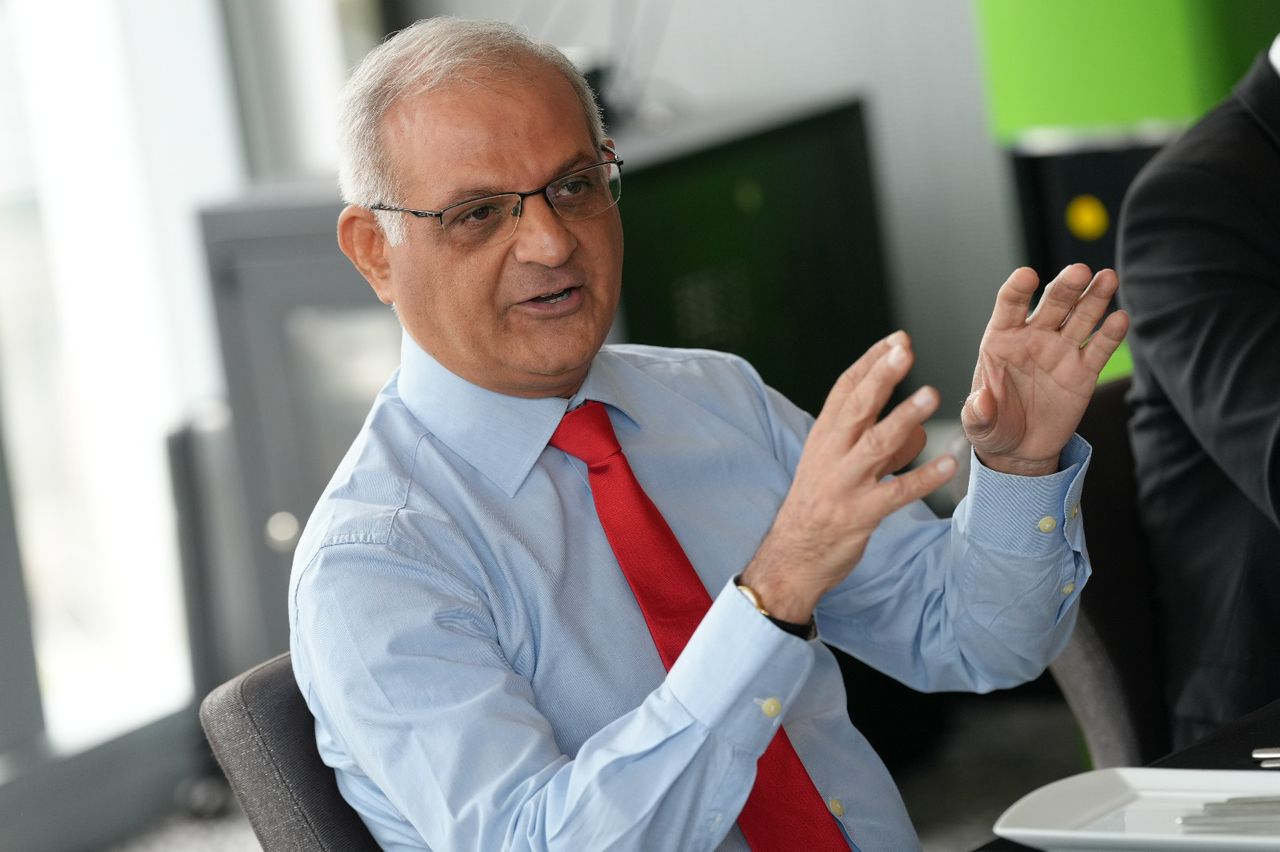
Shan Saeed, Global Chief Economist at Juwai IQI
By Tengku Noor Shamsiah Tengku Abdullah
KUALA LUMPUR, Nov 19 – ASEAN enters 2025 with a renewed strategic identity: macroeconomic stability as the region’s core doctrine for long-term, sustainable growth. With more than 710 million people and a projected GDP of USD 4.7–5.0 trillion by 2030, Southeast Asia is positioning itself as one of the world’s most resilient and opportunity-rich economic blocs.
This momentum is anchored in fiscal discipline, monetary credibility, industrial upgrading and diversified resource endowments. Across the ASEAN-5 — Malaysia, Indonesia, Thailand, Vietnam and the Philippines — a unified macroeconomic philosophy is emerging: stability as the indispensable foundation for compounding long-term growth.
According to Shan Saeed, Global Chief Economist at Juwai IQI, ASEAN’s disciplined approach is its defining advantage in a volatile world. Shan, known for his forward-looking macro forecasts and strategic insights into commodities, currencies and geopolitical shifts, said:
“ASEAN is winning because the region understands that macroeconomic stability is not accidental. It is engineered. With strong reserves, diversified economies and strategic policy discipline, ASEAN is becoming the world’s most resilient emerging-market cluster.”

Shan is widely recognised for his work linking macroeconomic trends with long-term investment cycles, while Juwai IQI provides data-driven advisory on real estate, global investment flows and economic outlooks.
Malaysia’s outlook remains resilient, supported by foreign-exchange reserves of around USD 115 billion, projected GDP growth of 5.0–6.0 per cent in 2025, a fiscal deficit targeted below 4 per cent of GDP and a diversified industrial base spanning electrical and electronics, semiconductors, LNG and palm oil. Fiscal consolidation continues to reinforce Malaysia’s sovereign credibility and investor confidence.
Indonesia, ASEAN’s largest economy, continues to fortify its fundamentals with foreign-exchange reserves in the range of USD 140–145 billion and a broadly managed rupiah corridor of IDR 15,200–15,800. GDP growth is expected at 5.0–5.8 per cent in 2025, supported by foreign direct investment inflows of USD 52–57 billion. Its rich endowment of nickel, bauxite, copper, coal and gold underpins its downstream strategy in EV batteries and energy-transition minerals.
Thailand maintains a powerful industrial base despite cyclical headwinds. With foreign-exchange reserves estimated at USD 210–220 billion and GDP growth projected at 3.5–4.0 per cent in 2025, Thailand remains one of ASEAN’s most stable economies. Automotive, electronics and agro-processing continue to drive production and exports.
Vietnam is projected to grow 7–8 per cent in 2025, supported by foreign direct investment inflows of USD 22–24 billion. Its export engine — electronics, smartphones, semiconductors and textiles — places it among the region’s fastest-expanding manufacturing platforms. Rising integration into global value chains solidifies Vietnam’s status as an industrial and export powerhouse.
The Philippines’ macro-outlook is supported by foreign-exchange reserves of USD 100–104 billion and projected GDP growth of 5.8–6.5 per cent in 2025. Its key supports include business process outsourcing, remittances exceeding USD 38 billion, agriculture and minerals. A young labour force and expanding services ecosystem strengthen long-term prospects.
Collectively, the ASEAN-5 form a macro-coherent regional block shaped by disciplined fiscal frameworks, credible central banking, strong reserve buffers, rising manufacturing depth, diversified export engines and abundant natural resources. From Indonesia’s minerals and Malaysia’s electronics supply chains to Thailand’s automotive base, Vietnam’s manufacturing exports and the Philippines’ services sector, ASEAN commands a formidable economic ecosystem.
Shan emphasises that this consistency forms ASEAN’s most valuable differentiator.
“In a fragmented global economy, ASEAN stands out because stability is its competitive advantage. Investors trust predictability—and ASEAN delivers that with discipline and clarity,” he said.
As global supply chains recalibrate and geopolitical uncertainty rises, ASEAN’s commitment to macroeconomic steadiness has become a strategic asset. The region’s stability doctrine strengthens investor conviction, enhances currency confidence, attracts long-term investment and differentiates ASEAN from more volatile emerging markets.
Shan summarises ASEAN’s trajectory succinctly:
“ASEAN remains firmly on the global investor radar because the region is building its future on a foundation the world values most—stability.”
ASEAN’s long-term ascent is grounded in this emerging stability doctrine, which positions the region as a resilient, predictable and increasingly influential pillar of the global economy. Stability is not merely desirable — it is ASEAN’s strategic path toward sustainable prosperity.
- TNS NEWS