


Global Capital Flows and the End of Dollar Supremacy

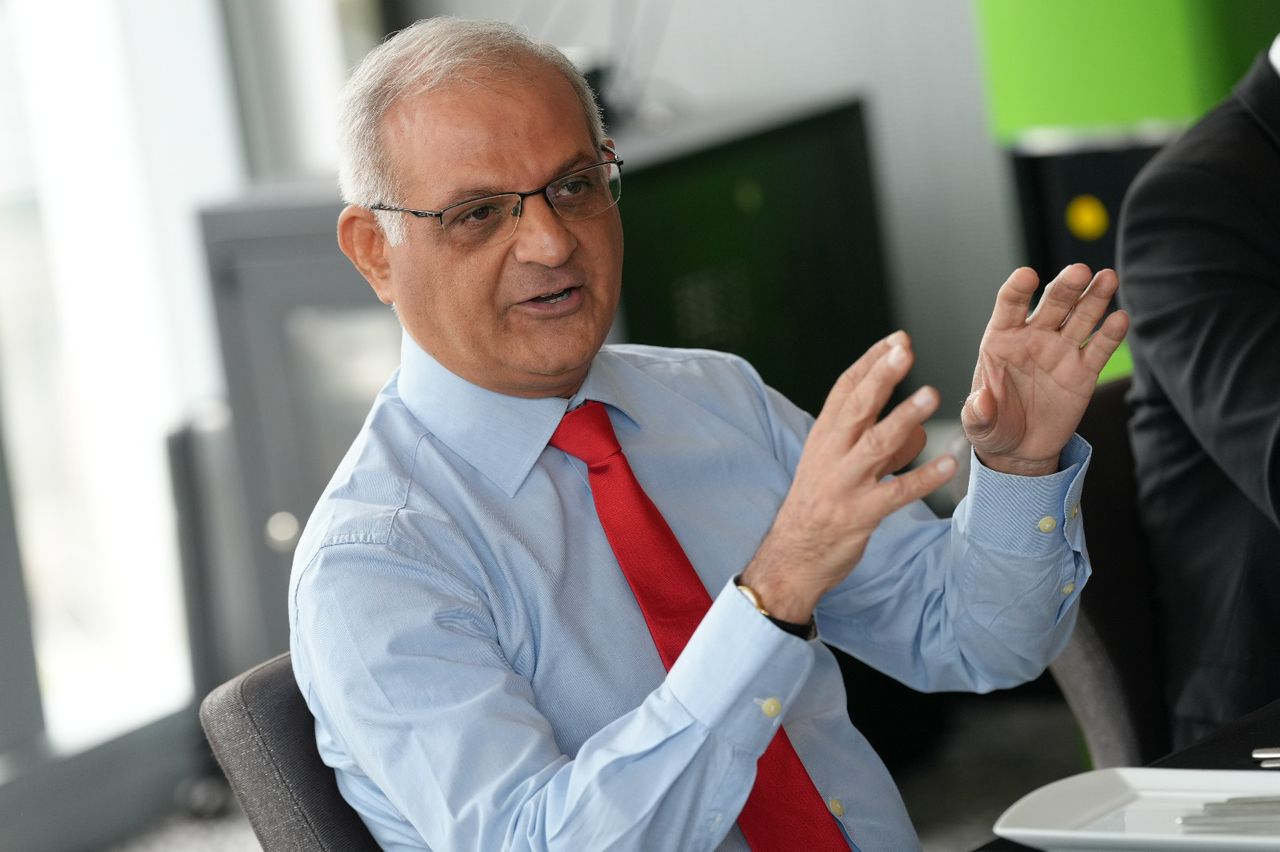
Shan Saeed, Global Chief Economist of Juwai IQI, says Malaysia is poised to benefit from global capital realignment as investors pivot toward Asia’s resilient, growth-driven economies.
By TENGKU NOOR SHAMSIAH TENGKU ABDULLAH
KUALA LUMPUR, Oct 9 – The Federal Reserve’s decision to ease borrowing costs marks a pivotal recalibration in global capital dynamics. As U.S. yields decline, liquidity is naturally gravitating toward higher-yielding, growth-oriented economies — particularly in emerging Asia, where fundamentals remain robust.
“Asia is once again the centre of global capital rotation. When the cost of capital in the U.S. falls, investors instinctively look to markets with stronger growth multipliers and stable political systems, said Shan Saeed, Global Chief Economist of Juwai IQI
Speaking to TNS News here today, Shan said, “ Malaysia, with its improving macro indicators and investment-friendly framework, is well-positioned to attract renewed portfolio inflows into equities, sovereign debt, and green infrastructure.”
A structurally weaker U.S. Dollar — down nearly 10 to 12 percent year-to-date — could herald the twilight of its aggressive dominance phase.
This shift, Shan noted, “will amplify commodity prices denominated in U.S. dollars, from Brent crude and copper to palm oil and gold.”
The outcome, he added, “is a stronger external position for ASEAN exporters and fiscal flexibility for governments to pursue long-term capital-formation agendas.”
For Bank Negara Malaysia (BNM), the Fed’s pivot alleviates pressure to match prior global tightening cycles. With headline inflation moderating between 2.1 and 2.5 percent, and GDP projected to expand by 4.5 to 5.5 percent in 2026, the central bank’s focus remains sustaining growth while safeguarding financial stability.
“The Ringgit will likely trade between 4.00 and 4.25 against the U.S. dollar,” Saeed forecasted, “maintaining structural stability and reflecting Malaysia’s sound fundamentals.”
He added that Malaysia’s monetary stance “will remain data-driven, not reactionary. A premature rate cut could be counterproductive — instead, a calibrated pause reinforces BNM’s credibility and investor confidence.”
According to Shan, BNM’s policy equilibrium underscores a broader strategic discipline: “Rather than chasing short-term market sentiment, the central bank continues to anchor inflation expectations while ensuring real growth momentum — a balance few emerging economies can sustain.”
The U.S. Federal Open Market Committee’s internal divergence between inflation hawks and growth advocates underscores the global policy volatility investors must now price in.
Yet amid this uncertainty, ASEAN’s appeal strengthens: relative macro-stability, demographic resilience, and accelerating supply-chain diversification. “
In times of global ambiguity, investors value predictability. Southeast Asia offers that — especially Malaysia, Indonesia, and Vietnam,” said Shan.
He highlighted that long-term foreign direct investment decisions are increasingly favouring the region.
“Malaysia alone is expected to capture between USD 12 billion and USD 14 billion in net inflows in 2025,” he said, “driven by high-tech manufacturing, semiconductors, and renewable-energy corridors.
This is not speculative money — it’s strategic capital seeking structural growth.” In a world of policy bifurcation, Shan stressed, “nations with clarity, consistency, and credible governance — Malaysia foremost among them — will continue to command investor trust and capital traction.”
Shan Saeed is the Global Chief Economist at Juwai IQI, one of Asia’s largest real estate, investment, and technology advisory groups with presence in over 20 countries.
With more than two decades of experience in global financial markets, he has advised sovereign funds, banks, and multinational corporations on macroeconomic trends, currency strategy, and capital flows.
He is known for his forward-looking analyses on Asia’s economic transformation and the shifting balance of global capital.
Juwai IQI, headquartered in Kuala Lumpur, operates at the intersection of property, finance, and digital innovation, empowering investors and developers through real-time intelligence, cross-border market access, and integrated financial solutions. – TNS NEWS