


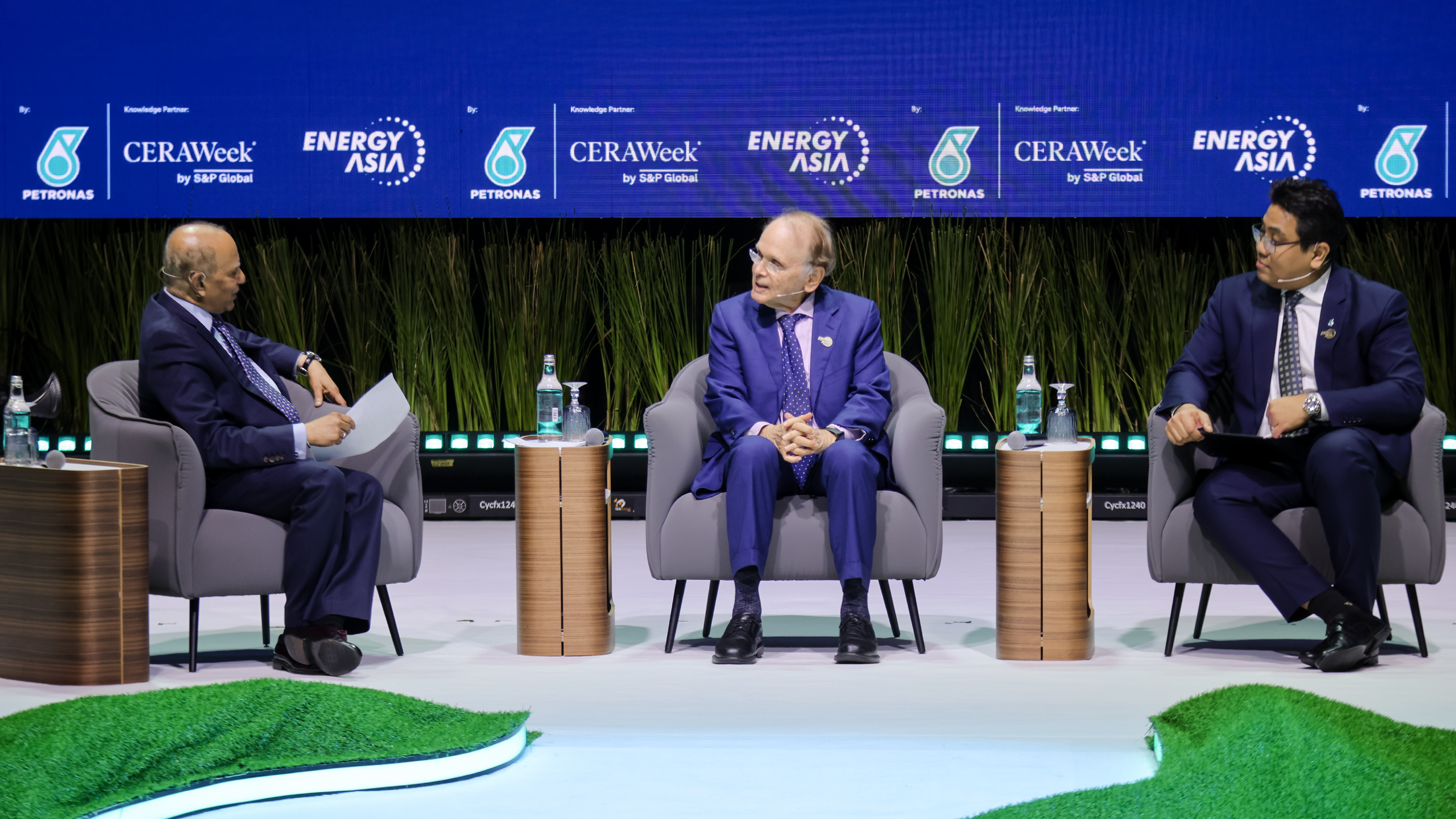

From Left: Dr. Atul Arya, SVP and Chief Energy Strategist of S&P Global; Dr. Daniel Yergin, VC of S&P Global & Founder of CERAWeek; and Tan Sri Tengku Muhammad Taufik, President & Group CEO of PETRONAS and Chairman of Energy reflect on the outcomes of the three-day Energy Asia 2025 conference.
By PHUBIEYAS AHMAD
KUALA LUMPUR, June 22 — Malaysia has cemented its position as Asia’s pivotal hub for the energy transition, following the successful conclusion of Energy Asia 2025. Hosted by PETRONAS in a powerful partnership with CERAWeek by S&P Global, the summit, held from June 16-18, concluded with a decisive call for urgent and actionable strategies tailored to the region’s unique needs.
Officiated by Prime Minister Datuk Seri Anwar Ibrahim, the event drew over 4,000 leaders, financiers, and energy professionals from 60 countries, affirming its status as one of Asia’s most significant energy gatherings this year.
“Energy Asia 2025 addressed the realities of the energy transition within the context of this region,” said Tan Sri Tengku Muhammad Taufik, PETRONAS President & Group CEO and Chairman of Energy Asia. “Asia stands firm in our pragmatic and collaborative approach in shaping a just and equitable energy future for more than half of the global population.”
A Flurry of Landmark Deals
Underscoring a focus on tangible outcomes, the summit witnessed the signing of 14 Memoranda of Understanding (MoUs). These strategic agreements span the energy spectrum, from securing hydrocarbon supply chains to diversifying into new markets:
- Upstream Collaboration: A strategic cooperation and farm-out agreement between PETRONAS and TotalEnergies, alongside a joint venture framework with Eni, will deepen upstream development in the region.
- LNG Diversification: An LNG Sale and Purchase Agreement with Commonwealth LNG of the U.S. and an MoU with Japan’s JERA will enhance supply resilience and strengthen the gas value chain for key Asian partners.
- Domestic Investment: Malaysia Petroleum Management (MPM) awarded the Temaris Cluster Production Sharing Contract (PSC) to Seascape Energy Asia (One) Sdn Bhd, boosting local upstream activity.
Pioneering the Low-Carbon Future
Equally significant were the bold moves to accelerate decarbonisation and build a future-ready workforce:
- Blue Carbon Collective: PETRONAS launched a joint research initiative with the Mercedes-AMG PETRONAS Formula 1 Team, Universiti Putra Malaysia, and the University of Sao Paolo to advance nature-based climate solutions like mangrove carbon capture.
- Workforce Reskilling: The new PETRONAS Energy Transition Academy (P-ETA) was introduced to equip the energy workforce with the skills required for a low-carbon economy.
- CCS Infrastructure: Jules Nautica Sdn Bhd, a new joint venture by PETRONAS CCS Ventures, MISC Berhad, and Mitsui O.S.K. Lines, was formed to own and operate liquefied CO₂ carriers, building a critical value chain for Carbon Capture and Storage (CCS) in the region.
Aligning Leadership Behind Closed Doors
Beyond the public announcements, crucial strategic alignment took place at the inaugural Energy Asia Global Leadership Executive Forum. The closed-door meeting of over 30 global CEOs and C-suite leaders established consensus on four pillars for regional action: building resilient energy systems, enhancing project bankability, delivering emissions reduction with social impact, and accelerating decarbonisation technologies.
Engaging the Public with Tomorrow’s Technology
Running concurrently, the Energy Park offered a window into a sustainable future for nearly 14,000 visitors. The exhibit showcased cutting-edge solutions, digital technologies, and clean energy practices from PETRONAS and its partners.
Conclusion: A New Benchmark for Regional Transition
Energy Asia 2025 was more than a diplomatic success; it was a clear statement of intent. By converting ambitious goals into signed deals, new institutions, and a unified leadership vision, PETRONAS has set a new regional benchmark for an energy transition that is both progressive and pragmatic.
As the global energy landscape evolves, PETRONAS has positioned Malaysia not just as a participant, but as a pivotal architect of Asia’s just, affordable, and secure energy future.
- TNS News