


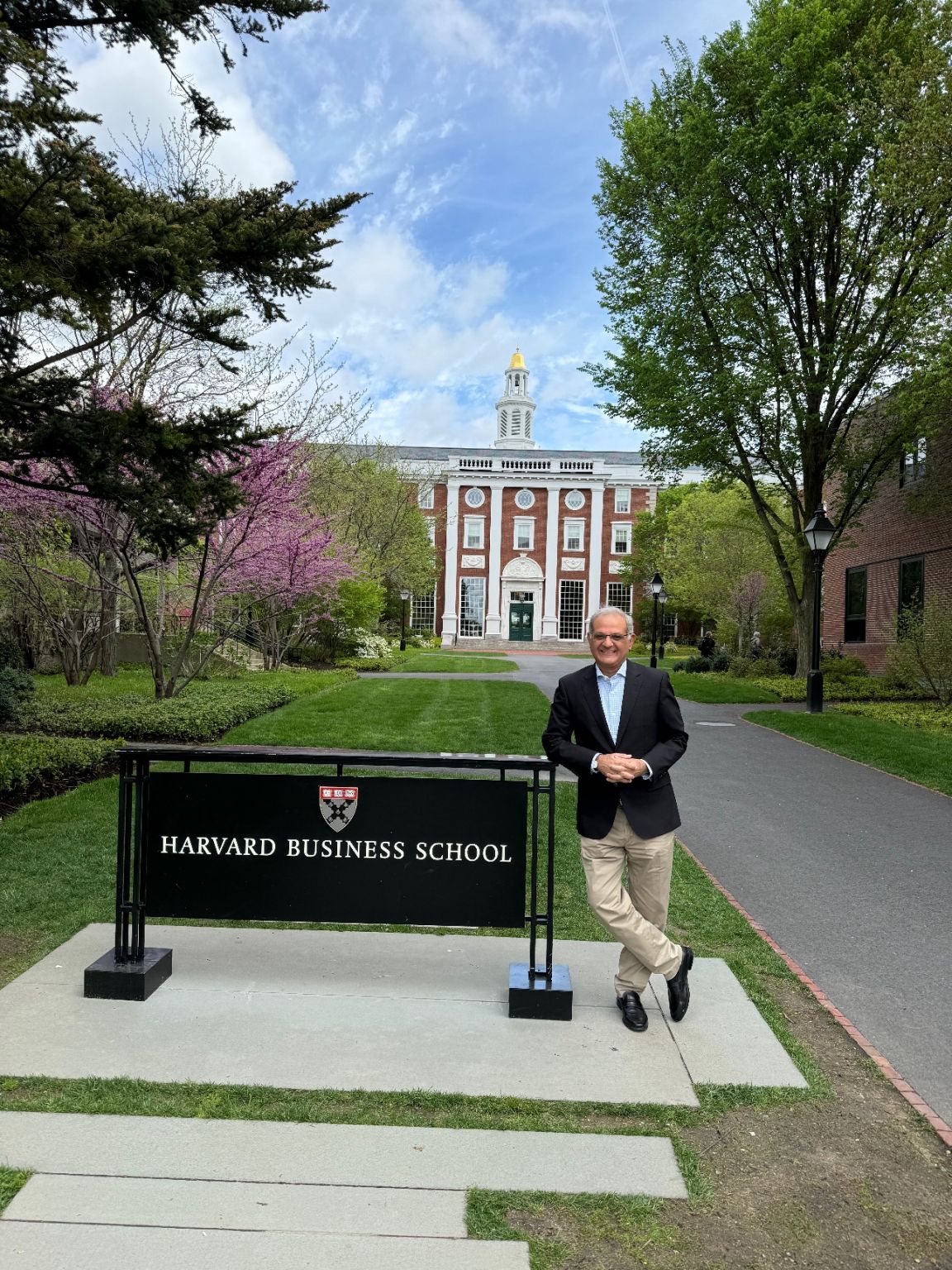

Economist Shan Saeed during a visit to Harvard Business School, where he continues to draw inspiration for global economic thought leadership
Economist Shan Saeed says the 13th Malaysia Plan charts a credible course for inclusive growth and global relevance, but underscores that disciplined execution is vital.
By TENGKU NOOR SHAMSIAH TENGKU ABDULLAH
KUALA LUMPUR , Aug 5 – Malaysia’s newly unveiled 13th Malaysia Plan (RMK13) represents a bold and timely policy shift aimed at securing economic resilience and asserting regional leadership amid a volatile global economy. This is the view of global economist Shan Saeed, who described the five-year plan as “a strategic playbook for growth, reform, and diplomacy” in an exclusive interview with TNS News.
Saeed, Chief Economist at Juwai IQI, said the plan’s holistic alignment with Ekonomi MADANI reflects Prime Minister Anwar Ibrahim’s intent to position Malaysia as a competitive, inclusive, and diplomatically agile economy on the world stage.
“RMK13 is not just about numbers—it’s about narrative,” Saeed said. “Malaysia is sending a message that it intends to lead on both economic reform and regional diplomacy.”
RMK13 in Focus: A Blueprint for 2026–2030
Launched on 31 July, the RMK13 outlines a RM430 billion development expenditure framework, of which RM227 billion is dedicated to capital-intensive infrastructure and productivity-enhancing investments. The government aims for annual GDP growth of 4.5%–5.5%, while lifting Gross National Income (GNI) per capita to RM77,200 by 2030.
In a major diplomatic development, Anwar also announced that U.S. President Donald Trump will attend the 47th ASEAN Summit in Kuala Lumpur this October—his first visit to the region since returning to office. The visit is seen as tacit support for Malaysia’s non-aligned stance and rising leadership within ASEAN.
Macroeconomic Stability Through Fiscal Reform
Saeed praised the Plan’s emphasis on fiscal consolidation, particularly its commitment to subsidy rationalisation and outcome-based public spending.
“Malaysia is sending the right signals to the investment community,” he said. “Tightening fiscal discipline while maintaining pro-growth policies can enhance investor confidence and long-term debt sustainability.”
However, he warned that sequencing will be key: “Without sufficient social safeguards, fiscal tightening could affect consumption and widen inequality in the short term.”
MADANI Vision: Growth with Equity
Central to RMK13 is the pursuit of a just, sustainable, and inclusive economy under the MADANI framework. Saeed believes the vision adds philosophical depth to Malaysia’s economic planning.
“The MADANI narrative speaks to dignity and shared prosperity,” he said. “But its credibility will depend on real impact, particularly in Sabah and Sarawak.”
He cautioned that failure to deliver tangible development outcomes in East Malaysia could undermine public trust and create long-term political and economic consequences.
Green and Digital Economy: Pathway to Leadership
The Plan outlines major ambitions for Malaysia to lead in renewable energy, digital transformation, and regional power integration through the ASEAN Power Grid.
Saeed called the focus timely and strategic:
“Malaysia has the fundamentals to lead the green and digital economy, especially in sectors like EVs, data centres, halal logistics, and smart manufacturing. But we need to attract high-impact private investment and cultivate deep-tech talent pipelines.”
He added that the government should look at long-term incentives, innovation ecosystems, and public-private partnerships to accelerate these shifts.
Strategic Autonomy in a Volatile Global Economy
Anwar’s speech framed RMK13 within a volatile global economy, marked by economic fragmentation and great power competition.
Saeed endorsed this framing, noting that Malaysia’s non-aligned foreign policy is a strategic asset.
“The Prime Minister rightly positioned Malaysia as a diplomatic bridge and ASEAN stabiliser. Trump’s upcoming visit to Kuala Lumpur is a recognition of Malaysia’s growing geopolitical relevance.”
He added that Malaysia’s balanced engagement with both China and the U.S. will be critical to preserving its strategic autonomy.
Execution: The Real Test of RMK13
Despite the strong fundamentals, Saeed stressed that the success of RMK13 will depend entirely on delivery mechanisms and institutional discipline.
“Malaysia has had many great plans on paper. What we need now is outcome-focused governance, empowered delivery units, and strict accountability.”
He called for civil service reforms, better data integration across ministries, and transparent performance dashboards to track implementation.
Strengths, Risks, and the Legacy Question
Asked to summarise his assessment, Saeed highlighted the following:
Top Strengths:
- Strong macro-fiscal positioning with reformist intent.
- Smart integration of economic and foreign policy strategy.
Top Risks:
- Execution failure due to bureaucratic inertia.
- Political backlash if reform pain is not cushioned.
Still, he believes RMK13 has the potential to define Anwar Ibrahim’s legacy:
“This is a prime minister who is not shying away from hard choices. If RMK13 is implemented with integrity and courage, it will mark a turning point in Malaysia’s development story.”
About Shan Saeed
Shan Saeed is the Chief Economist at Juwai IQI and a University of Chicago-trained economist with over 23 years of experience in global macroeconomic strategy, energy policy, and financial markets. He is a frequent commentator on international platforms including CNBC, Bloomberg, and Al Jazeera.
- TNS NEWS