


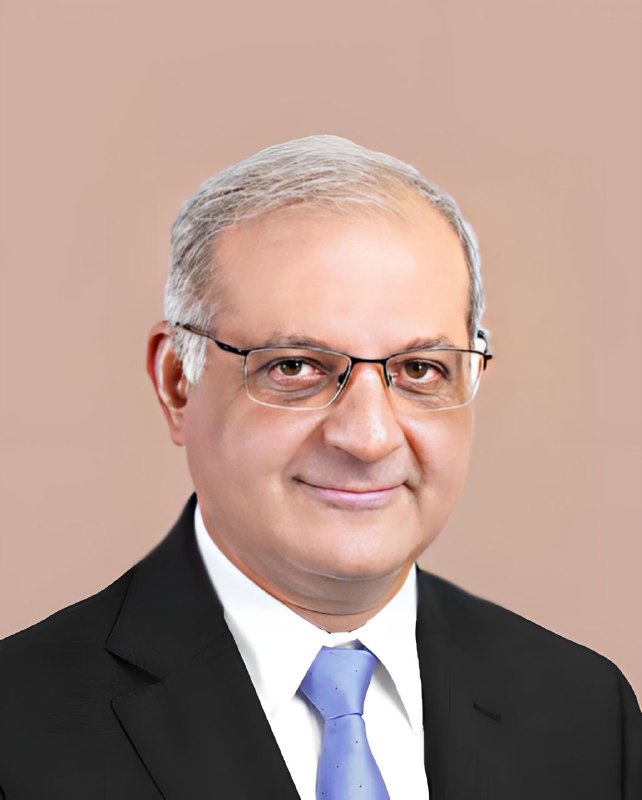
Reduced geopolitical tail risks after the US-Iran talks are triggering a structural rotation of global capital toward ASEAN, the Gulf and Africa — regions increasingly positioned to anchor the next phase of global growth, says Juwai IQI Global Chief Economist Shan Saeed.
By TENGKU NOOR SHAMSIAH TENGKU ABDULLAH
KUALA LUMPUR, April 16 – The conclusion of US-Iran ceasefire talks in Islamabad has not resolved the geopolitical tensions surrounding the Gulf — but it has reduced enough risk for markets to begin repricing the global outlook.
For Shan Saeed, Global Chief Economist at Juwai IQI, the talks mark a decisive reset in the global macro regime, one with immediate implications for energy corridors, capital flows and the geography of growth.
In an interview with TNS News, Shan said markets are not pricing a full resolution of geopolitical risks, but a meaningful reduction in systemic uncertainty.
“What markets are now pricing is not absolute resolution, but a material reduction in tail risk — particularly across energy corridors.”
That distinction matters. With the Strait of Hormuz facilitating nearly 20 per cent of global oil flows, even partial normalisation is sufficient to compress insurance premia, stabilise freight costs and ease the inflationary impulse embedded in global supply chains.
The International Monetary Fund has revised global growth to about 3.1 per cent for 2026, with inflation still hovering above 4 per cent a reminder that energy security remains central to macro stability.
“Energy security is macro stability,” Shan said. “That is not a slogan, it is the lesson of the past several months.”
As volatility moderates, capital is not retreating. It is rotating with precision.
Three regions are emerging as the principal beneficiaries: ASEAN, the Gulf Cooperation Council (GCC), and Africa.
“This is not a cyclical rebound,” Shan said. “It is a structural reallocation of global growth and capital flows.”
ASEAN: From Production Base to Global Engine
ASEAN is increasingly transitioning from a peripheral production base into a core engine of global expansion.
Home to nearly 700 million people and more than US$4 trillion in combined GDP, the region is projected to grow between 4.5 and 5.0 per cent, supported by resilient domestic demand, infrastructure investment and supply-chain diversification.
Indonesia anchors the bloc with growth near 5 per cent, underpinned by commodity strength and policy discipline. Vietnam continues to capture global manufacturing share as multinational companies diversify supply chains. Malaysia, as a net energy exporter with targeted subsidy architecture, maintains relative inflation resilience and macro stability.
Shan identifies what he calls ASEAN’s “triple advantage”: demographic scale, trade centrality and policy credibility.
“ASEAN is no longer an emerging market story — it is a systemic pillar of global growth.”
GCC: From Energy Power to Capital Command
For the Gulf Cooperation Council, stabilisation of energy flows carries transformative implications.
With oil prices normalising within the US$85–US$100 per barrel range, fiscal balances across the region remain robust even as market volatility declines.
The GCC’s macro profile is increasingly diversified. The bloc’s combined economy stands at approximately US$2.3 trillion, with growth projected at about 3.7 per cent in 2026 and expected to accelerate toward 4 per cent and above. Non-oil sectors are expanding between 4 and 5 per cent.
More significantly, sovereign wealth funds across Saudi Arabia, the United Arab Emirates and Qatar collectively manage more than US$4 trillion in assets, actively deploying capital into infrastructure, technology, energy transition projects and global financial markets.
“This is a structural pivot,” Shan said. “The region has moved from being a supplier of energy to being a commander of capital.”
“The GCC is no longer just pricing oil, it is pricing global capital.”
Africa: Scale, Resources and Structural Ascent
Africa forms the third pillar of Shan’s emerging growth triad and arguably the most consequential over the long term.
The continent is transitioning from a frontier narrative into a strategic macro frontier. Growth is projected between 4.0 and 4.5 per cent, with 12 of the world’s 20 fastest-growing economies located there.
Africa’s structural proposition is formidable. The continent holds roughly 60 per cent of the world’s uncultivated arable land, vast reserves of critical minerals required for the global energy transition and the fastest-growing demographic base globally.
Stabilising energy prices reduce imported inflation pressures and fiscal strain across many African economies, enabling greater focus on infrastructure development, industrialisation and capital formation.
“Africa’s role is no longer theoretical,” Shan said. “It is structurally embedded in long-term global capital allocation.”
The Emerging Global Capital Map
Shan’s synthesis of the post-Islamabad macro landscape is clear: the global economy will not recover in synchrony. It will reprice asymmetrically.
ASEAN delivers growth anchored by industrial depth and policy credibility. The GCC provides liquidity and strategic capital deployment. Africa offers scale, resources and long-duration economic potential.
“In a fragmented global economy, capital is no longer passive it is discerning, mobile and relentlessly forward-looking,” Shan said.
Markets, he argues, will increasingly reward jurisdictions where energy security, institutional clarity, demographic strength and capital deployment converge.
The Islamabad talks may not have altered the underlying architecture of global risk but they have clarified where the opportunities lie.
“Facts remain in vogue,” Shan said. “Markets reward foresight, not consensus.” – TNS NEWS