


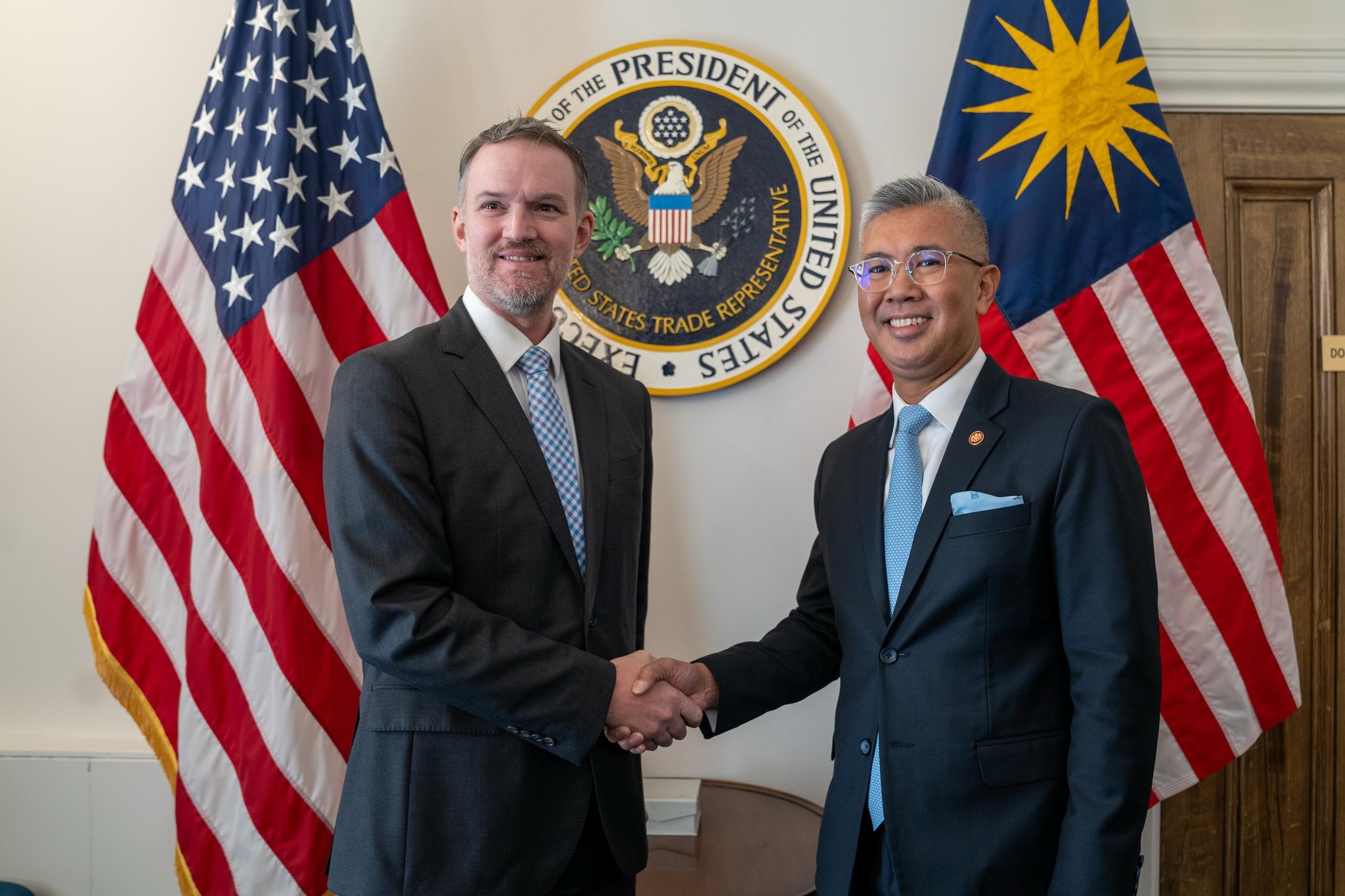

Tengku Datuk Seri Zafrul Aziz and US Trade Representative, H.E. Ambassador Jamieson Greer in Washington DC. Pix credit: Tengku Zafrul FB
By TENGKU NOOR SHAMSIAH TENGKU ABDULLAH
KUALA LUMPUR, April 26 — Malaysia is pushing for a “win-win” resolution to the looming US reciprocal tariffs, seizing the opportunity presented by Washington’s 90-day pause to accelerate high-level negotiations.
Led by Minister of Investment, Trade and Industry (MITI) Tengku Datuk Seri Utama Zafrul Aziz, Malaysia has moved quickly to engage US officials, meeting US Secretary of Commerce Howard Lutnick and US Trade Representative Ambassador Jamieson Greer in Washington D.C. on April 24.
The discussions focused on four areas where Malaysia hopes to strike common ground: reducing the US-Malaysia trade deficit, addressing non-tariff barriers, strengthening technological safeguards, and exploring the groundwork for a potential bilateral trade agreement.
“These first meetings are a step in the right direction,” said Tengku Zafrul. “We will continue to keep the momentum by following up urgently on key issues within the 90-day period. All communication lines remain open, and we will work towards an amicable solution.”
Malaysia has reiterated that it will not retaliate against the US tariffs, preferring dialogue and cooperation over confrontation — a strategic posture that underscores Malaysia’s commitment to sustaining one of its most important economic partnerships.

Reciprocal Tariffs: A Flashpoint in Global Trade
The concept of “reciprocal tariffs” — levying the same duties on imports as those imposed on a country’s own exports — has been reignited under President Donald Trump’s second term. The tariffs are aimed at correcting perceived trade inequities, but they have also triggered concerns about global supply chain disruptions and protectionist backlash. Malaysia, despite its strong trade ties with the US, was among the economies targeted.
Long-Term Partners, Short-Term Pressures
MITI emphasized that bilateral trade between Malaysia and the US has become more balanced over the past decade, with the US trade deficit with Malaysia steadily declining. American companies have also made long-standing, strategic contributions to Malaysia’s economy — a foundation that both sides are eager to protect amid current pressures.
Beyond tariffs, Malaysia and the US also discussed how Washington could strengthen its cooperation with ASEAN, capitalizing on Malaysia’s current ASEAN Chairmanship to promote shared regional stability and economic growth.
As negotiations proceed, Malaysia’s strategy is clear: defend its trade interests, strengthen bilateral trust, and turn a potential trade dispute into a deeper economic partnership.
- TNS NEWS